




Introduction
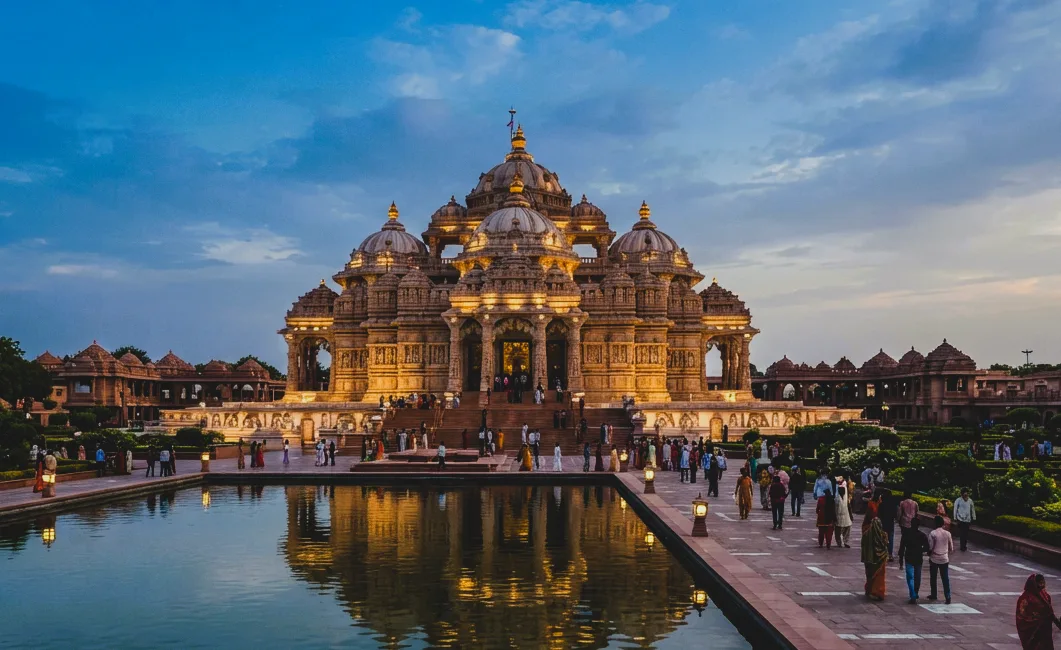
Swaminarayan Akshardham Mandir in New Delhi is one of India's most magnificent Hindu temple complexes and a major spiritual-cultural landmark. Situated on the banks of the Yamuna River in East Delhi, near the Noida border, it is dedicated to Bhagwan Swaminarayan (1781-1830). The name "Akshardham" translates to the divine, eternal abode of God. Built by the Bochasanwasi Akshar Purushottam Swaminarayan Sanstha (BAPS), the complex combines traditional Hindu architecture with modern experiential exhibitions, drawing millions of visitors each year.
While other Akshardham complexes exist - in Gandhinagar, Gujarat (opened 1992), and Robbinsville, New Jersey (opened 2023)-the Delhi campus remains the most widely recognized in India for its scale and visitor experience.
History and Inspiration
The vision for a grand temple on the Yamuna originated with Yogiji Maharaj in the late 1960s. His successor, Pramukh Swami Maharaj, brought the project to life. Land was allocated around 2000 by the Delhi Development Authority and the Uttar Pradesh government. Construction began with the groundbreaking ceremony on 8 November 2000, and the first sculpted stone was laid on 2 July 2001/
The complex was completed in just under five years and inaugurated on 6 November 2005 by Pramukh Swami Maharaj in the presence of then-President APJ Abdul Kalam, Prime Minister Manmohan Singh, and other national leaders. More than 8,000 volunteers and thousands of artisans contributed over 300 million volunteer hours to its creation.
Architecture of the Main Mandir
The central Akshardham Mandir stands approximately 43 metres (141 feet) high, 96 metres (316 feet) wide, and 109 metres (356 feet) long. It was designed according to ancient Shilpa Shastras and Vastu Shastra principles in the Maru-Gurjara style, without the use of structural steel or iron.
Key architectural features include:
- 234 intricately carved pillars
- 9 ornate domes
- 20 quadrangular spires
- Over 20,000 hand-carved statues and figures depicting deities, sages, devotees, musicians, dancers, flora, and fauna
The structure is built from pink Rajasthani sandstone and white Italian Carrara marble. At its base lies the Gajendra Pith, a plinth adorned with 148 life-sized stone elephants weighing a total of about 3,000 tons. These carvings narrate stories of elephants in relation to nature, humans, and the divine, symbolizing strength strength and gentleness.
Inside the garbhagriha (inner sanctum) is an 11-foot-high-gold-leafed murti of Bhagwan Swaminarayan, accompanied by murtis of the spiritual succession of BAPS gurus. Additional shrines honour Sita-Ram, Radha-Krishna, Lakshmi-Narayan, and Shiv-Parvati. The exterior facade (mandovar) and the Narayan Peeth with its bronze relief panels further enrich the experience of devotion and circumambulation.
Surrounding Features and Sacred Elements
The mandir is encircled by the Narayan Sarovar, a lake containing water from 151 sacred rivers and lakes associated with Swaminarayan's travels. One hundred and eight gaumukhs (cow-mouth spouts) surround the water body. The complex also includes the Abhishek Mandap, where devotees can offer ritual water to the murti of Nilkanth Varni (the teenage form of Swaminarayan).
Exhibitions and Cultural Attractions
The campus extends beyond worship to education and cultural immersion:
- Sahajanand Darshan (Hall of Values): Interactive dioramas using robotics, light, and sound to illustrate Swaminarayn's teachings on non-violence, prayer, family harmony, and perseverance.
- Neelkanth Darshan: A large-format film depicting the teenage pilgrimage of Nilkanth Varni across India, accompanied by a towering bronze statue outside the theatre.
- Sanskruti Vihar (Cultural Boat Ride): A 12-15 minute journey through scenes of ancient Indian history and Vedic culture using life-size figures and robotics.
- Sahaj Anand Water Show: An evening multimedia spectacle at the Yagnapurush Kund (a large stepwell-style structure), featuring water, lights, lasers, and narrative drawn from the Upanishads.
Additional attractions include Bharat Upavan (Garden of India) with bronze sculptures of national and cultural figures, landscaped gardens, and a vegetarian food court inspired by ancient cave architecture.
Visitor Information
Entry to the mandir complex and darshan is free. Separate tickets are required for the exhibitions and water show (current rates should be checked on the official website).
Timings (subject to change; verify before visiting):
- Open Tuesday to Sunday
- First entry: approximately 10:00 am
- Last entry: approximately 6:30 pm
- Mandir darshan often continues until 8:00 pm
- Closed every Monday
Aarti is performed in the morning and evening. Visitors are expected to dress modestly (shoulders and knees covered). Photography is restricted in many areas, and electronic devices may need to be deposited. Facilities include cloakrooms, free wheelchairs (with limited access inside the main mandir), restrooms, parking, and a book/gift shop.
Location : NH 24, Pramukh Swami Maharaj Marg / Akshardham Setu, New Delhi 110092.
Nearest Metro Station : Akshardham (Blue Line), a short walk form the entrance. The Complex is also accessible from major railway stations and Indira Gandhi International Airport (about 21 km).
Spiritual and Cultural Significance
Akshardham serves as both a house of worship and a living museum of Indian spiritual heritage. It revives traditional stone-carving techniques while presenting universal values of devotion, harmony, service, non-violence, and the inherent divinity of every soul. For devotees and tourists alike, a visit offers an experience of peace, architectural beauty, and cultural insight.
For the latest timings, ticket prices, and guidelines, refer to the official website : Akshardham
Also Read

Comments
0