
1. Prem Mandir: History, significance and architecture
Prem Mandir, meaning Temple of Divine Love, was established under the guidance of Jagadguru Shri Kripalu Ji Maharaj. The temple was inaugurated in February 2012 and is maintained by Jagadguru Kripalu Parishat.
The temple complex is dedicated to the divine love of Radha and Krishna, while also honoring Sita and Ram.
Architectural Features
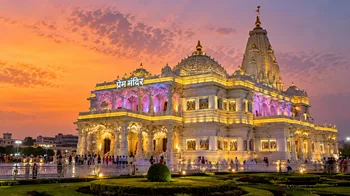
Prem Mandir is constructed predominantly from Italian white marble and features intricate carvings inspired by traditional Indian temple architecture.
The main structure rises approximately 125 feet and stands within a landscaped complex covering about 54 acres.
Its outer walls depict episodes from Krishna's life, while the surrounding gardens contain elaborate sculptural representations of divine pastimes, including Govardhan Leela, Kaliya Naag Leela and other scenes.
The temple is especially popular after sunset, when colorful lighting transforms the marble exterior into a spectacular visual attraction.
What makes Prem Mandir special ?
- Beautiful white-marble architecture and detailed sculptures.
- Shrines dedicated to Radha Krishna and Sita Ram.
- Landscaped gardens depicting episodes from Krishna's life.
- Evening illumination and musical fountain attraction.
- A spacious temple complex suitable for families and pilgrims.
- Free general entry, subject to temple rules and security arrangements.
The temple's combination of religious devotion, architecture and modern presentation makes it one of the most visited attractions in Vrindavan.
2. Prem Mandir darshan timings, aarti and musical fountain
The official Prem Mandir website publishes the following daily schedule.
| Activity | Timing |
|---|---|
| Morning darshan | 8:30 AM - 12:00 AM |
| Morning aarti | 8:30 AM |
| Morning bhog | 11:30 AM |
| Midday closure | 12:00 PM - 4:30 PM |
| Evening darshan | 4:30 PM - 8 :30 PM |
| Evening aarti | 4:30 PM |
| Evening bhog | 5:30 PM |
| Parikrama | 7:00 PM |
| Shayan aarti | 8:10 PM |
| Temple closes | 8:30 PM |
For the best overall experience, arrive around 5:00–5:30 PM, complete darshan, explore the gardens, and stay for the evening illumination and fountain.
3. Famous temples of Vrindavan: Complete visitor guide
Vrindavan has thousands of temples and shrines. The following are among the most historically, spiritually and architecturally significant for visitors.
1. Shri Banke Bihari Mandir Vrindavan
One of Vrindavan's most revered Krishna temples, associated with Swami Haridas and the worship of Thakur Banke Bihari Ji. Its distinctive jhanki darshan involves a curtain being opened and closed repeatedly.
2. Sri Sri Krishna Balaram Mandir (ISKCON Vrindavan)
Also called the Krishna Balaram Mandir, this temple was established under the guidance of A. C. Bhaktivedanta Swami Prabhupada and opened in 1975. Visitors can experience energetic kirtans, aarti, devotional chanting and an international community of Krishna devotees.
3. Shri Radha Raman Temple, Vrindavan
A historic temple associated with Gopala Bhatta Goswami. According to temple tradition, its Krishna deity manifested from a sacred Shaligram stone. The temple is particularly valued for its centuries-old worship practices.
4. Shri Radhavallabh Lal Ji Temple, Vrindavan
Associated with the 16th-century saint Hit Harivansh Mahaprabhu, the temple is the principal center of the Radha Vallabh devotional tradition, which places special emphasis on Radha's divine love.
5. Shri Radha Madan Mohan Ji Mandir, Vrindavan
One of the oldest surviving temple landmarks in Vrindavan, traditionally associated with Sanatana Goswami. Its historic red-sandstone structure and elevated setting make it particularly interesting for heritage enthusiasts.
6. Shri Govind Dev Ji Mandir, Vrindavan
A monumental red-sandstone temple associated with the late 16th century and the Gaudiya Vaishnava tradition. Its surviving architecture reflects the historic patronage of Krishna worship in Vrindavan.
7. Sri Rangnath Mandir (Sri Rangji Mandir)
Also known as Rangnath Temple, this remarkable 19th-century complex combines South Indian temple architecture with the devotional heritage of Braj. Its gopuram, temple courtyards and golden flagstaff distinguish it from many other Vrindavan shrines.
Other important historic temples
| Temple | Significance |
|---|---|
| Radha Damodar Temple | Associated with Jiva Goswami and the Gaudiya Vaishnava tradition |
| Radha Shyamsundar Temple | Historic shrine associated with Shyamananda Prabhu |
| Radha Gokulananda Temple | Contains deities connected with several Vaishnava saints |
| Radha Gopinath Temple | One of Vrindavan's historic Goswami-era temples |
| Shahji Temple | Known for ornate architecture and distinctive twisted marble pillars |
| Jaipur Temple | A large temple associated with the Jaipur royal family |
| Gopeshwar Mahadev Temple | Shiva temple connected with Krishna's Raas Leela traditions |
| Katyayani Peeth | Important shrine dedicated to Goddess Katyayani |
| Pagal Baba Temple | Multi-storey temple known for its distinctive appearance |
The seven historic Goswami temples—Govind Dev, Gopinath, Madan Mohan, Radha Raman, Radha Damodar, Radha Shyamsundar and Radha Gokulananda—form a particularly meaningful heritage circuit for devotees interested in the early development of Vrindavan's Vaishnava traditions.
4. Nidhivan, Seva Kunj and the sacred places of Krishna Leela
- Nidhivan, Vrindavan : Nidhivan is a sacred grove traditionally associated with the divine Raas Leela of Radha and Krishna. Devotees believe the divine couple performs Raas Leela here at night. This is a religious belief, not a scientifically established event. The site contains sacred trees, shrines and the Rang Mahal. Visitors must respect its restricted visiting hours.
- Seva Kunj, Vrindavan : Seva Kunj is another revered garden associated with Radha Krishna's divine pastimes. Its smaller shrines and traditional surroundings offer a different experience from the grand architecture of Prem Mandir.
- Keshi Ghat : Keshi Ghat is one of the most recognizable historic ghats along the Yamuna River. According to Krishna traditions, it is associated with Lord Krishna defeating the demon Keshi. The riverside steps and historic buildings make it a popular place for photography, contemplation and devotional visits. Visitors should exercise caution near the water and avoid entering the river where conditions are unsafe. Other sacred locations worth exploring include Imli Tala, Chir Ghat, Kaliya Ghat and the Vrindavan Parikrama Marg.
6. Famous temples and tourist attractions near Vrindavan
Visitors should also explore Mathura and the wider Braj region, where numerous sites are associated with the life and legends of Lord Krishna.
- Shri Krishna Janmabhoomi : Traditionally revered as Lord Krishna's birthplace, this temple complex is among the most important pilgrimage sites in Mathura. Security restrictions are strict, and visitors should expect limitations on mobile phones, cameras and bags.
- Dwarkadhish Temple : A historic Krishna temple famous for its traditional worship, elaborate decorations and festive celebrations, especially during Holi and Janmashtami.
- Vishram Ghat : One of Mathura's principal Yamuna ghats, associated with the belief that Krishna rested here after defeating Kansa. The evening aarti is a major attraction.
- Govardhan Hill : A sacred pilgrimage destination connected with the Govardhan Leela. Many devotees undertake the approximately 21-km Govardhan Parikrama, visiting locations such as Radha Kund, Shyam Kund and Kusum Sarovar.
- Shri Radha Rani Temple : Situated on a hill in Barsana, this temple is dedicated to Radha Rani. Barsana is particularly famous for its Lathmar Holi celebrations.
7. How to reach Prem Mandir and Vrindavan
By Train
The most practical major railway station is Mathura Junction (MTJ), which is connected to Delhi, Agra and many other Indian cities.
From Mathura Junction, travelers can reach Vrindavan by taxi, auto-rickshaw or other local transport. Prem Mandir is approximately 12–15 km away by road, depending on the route.
By Air
The nearest practical major international airport for many travelers is Indira Gandhi International Airport in Delhi. Agra's Kheria Airport is geographically closer, but its flight options may be limited.
From Delhi airport, visitors can hire a taxi or travel onward by rail from a suitable Delhi station.
By Road
Vrindavan is accessible from Delhi, Noida, Faridabad, Agra and other nearby cities through the regional highway network, including routes connecting with the Yamuna Expressway.
| Starting Point | Approximate road distance | Typical journey planning time |
|---|---|---|
| Delhi | 150–180 km | 3–4.5 hours |
| Faridabad | 125–155 km | 2.5–4 hours |
| Noida | 130–160 km | 2.5–4 hours |
| Agra | 65–75 km | 1.5–2 hours |
| Mathura Junction | 12–15 km | 25–45 minutes |
Travelers arriving by car should confirm available parking near their hotel or Prem Mandir. The narrow lanes around Banke Bihari Temple are better explored on foot or by cycle-rickshaw.
8. Suggested 2-day Mathura and Vrindavan itinerary
Day 1 - Vrindavan Temples
- 07:30–09:30 AM : Banke Bihari Temple darshan, allowing time for queues
- 09:30–11:30 AM : Radha Raman, Radha Vallabh and nearby old-city temples
- 11:30 AM–01 PM : Visit Nidhivan or Seva Kunj where opening hours permit
- 01-04 PM : Lunch, rest and local shopping
- 04-5:30 PM : ISKCON Temple and devotional kirtan
- 05:30 -08 PM : Prem Mandir darshan, gardens and evening fountain
Day 2 - Mathura and nearby attractions
- 07-09 AM : Shri Krishna Janmabhoomi
- 09:30-11 AM : Dwarkadhish Temple
- 11 AM - 01 PM : Mathura markets and local vegetarian food
- 01-04 PM : Rest or optional Gita Mandir visit
- Late afternoon : Mathura heritage lanes and Vishram Ghat
- Evening : Yamuna aarti, subject to local schedule
This is a suggested sequence rather than a guaranteed timetable. On crowded days, Banke Bihari alone may take several hours. Travelers who wish to visit Govardhan, Barsana, Nandgaon and Gokul should ideally add another one or two days.
9. Best time to visit Vrindavan
| Season | Conditions | Travel Advice |
|---|---|---|
| October–March | Generally pleasant to cool | Best for temple visits and sightseeing |
| April–June | Very hot afternoons | Prioritize early mornings and evenings |
| July–September | Humid, with monsoon rain | Carry rain protection and check road conditions |
| Holi and Janmashtami | Major celebrations and heavy crowds | Book accommodation early and expect restrictions |
10. Where to stay in Vrindavan
Accommodation ranges from economical dharmshalas and ashram guesthouses to mid-range hotels and larger resorts.
| Accommodation | Indicative nightly budget |
|---|---|
| Dharamshala / basic guesthouse | ₹400–₹1,000 |
| Budget hotel | ₹1,000–₹2,500 |
| Mid-range hotel | ₹2,500–₹5,000 |
| Premium hotel / resort | ₹5,000+ |
The Prem Mandir and Raman Reti areas are convenient for visiting Prem Mandir and ISKCON. The old-city area offers easier access to historic temples but can be noisier and more congested.
Families travelling with elderly people may prefer hotels with lift access, parking and reliable transport arrangements.
11. Famous food and shopping in Vrindavan
Vrindavan and Mathura are known for their vegetarian food and traditional sweets. Popular choices include Mathura peda, kachori with aloo sabzi, bedai, jalebi, lassi, rabri and simple North Indian thalis.
Visitors can also shop for Tulsi malas, Radha Krishna idols, devotional books, traditional clothing, puja items and handcrafted souvenirs.
When shopping in busy temple markets, compare prices and keep cash and personal belongings secure.
12. Important travel tips for devotees and tourists
- Dress respectfully: Modest clothing is appropriate for religious sites. Remove footwear wherever required.
- Confirm darshan timings: Many temples close during the afternoon, and festival schedules can differ.
- Be careful with monkeys: Monkeys in Vrindavan are known to grab spectacles, food and loose belongings. Avoid feeding or approaching them.
- Manage crowds: Keep children and elderly family members close, particularly near Banke Bihari Temple.
- Avoid unofficial VIP-darshan offers: Use only arrangements authorized by the temple administration.
- Carry essentials: Drinking water, necessary medication, identification and a charged phone are useful.
- Respect photography restrictions: Cameras and mobile phones may be prohibited inside certain temple areas.
- Allow extra travel time: Traffic controls, narrow streets and large crowds can delay visits.
13. Frequently asked questions
Is Prem Mandir free to visit ?
Yes. General entry and darshan are free.
What is the best time to visit Prem Mandir ?
The evening is particularly popular because visitors can see the temple illuminated and attend the musical fountain presentation.
How many days are sufficient for Vrindavan ?
Two days are suitable for the main temples of Vrindavan and Mathura. Three to four days provide a more relaxed experience and allow additional Braj-region sightseeing.
Can Prem Mandir and Banke Bihari Temple be visited in one day ?
Yes. Visit Banke Bihari in the morning and Prem Mandir in the evening, allowing time for transport and queues.
Is Vrindavan suitable for family travel ?
Yes, but families with young children or elderly members should avoid peak crowds where possible and plan regular rest breaks.
Are there accommodation and food facilities ?
Yes. Vrindavan offers hotels, guesthouses, dharmshalas, vegetarian restaurants and local transport services.
Prem Mandir and Vrindavan offer a combination of spirituality, historic architecture, religious traditions and cultural experiences. From the spectacular marble structure of Prem Mandir to the centuries-old Banke Bihari, Radha Raman and Madan Mohan temples, the destination has something meaningful to offer both pilgrims and general tourists.
For first-time visitors, a two-day journey covering the principal temples of Vrindavan and Mathura provides an excellent introduction to the region. Travelers with additional time can explore Govardhan, Barsana, Nandgaon and Gokul to experience more of the sacred Braj landscape.
Careful planning around temple timings, seasonal weather and festival crowds will make the journey more comfortable and rewarding.
Also Read :
Comments
0