



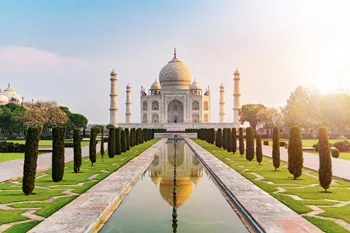
1. Taj Mahal: Important facts at a glance
| Particulars | Details |
|---|---|
| Monument | Taj Mahal |
| Location | Agra, Uttar Pradesh, India |
| Built by | Mughal Emperor Shah Jahan |
| Dedicated to | Mumtaz Mahal |
| Construction began | 1632 |
| Main mausoleum completed | Around 1648 |
| Wider complex completed | Around 1653 |
| Architectural style | Mughal, Persian, Islamic and India influences |
| Main building material | White marble |
| UNESCO recognition | 1983 |
| River | Yamuna |
| Managed by | Archaeological Survey of India (ASI) |
| Famous for | Architecture, history, craftsmanship and symbolism of love |
| Recommended visit duration | 2-3 hours |
| Best visiting season | October to March |
2. History of the Taj Mahal
The love story of Shah Jahan and Mumtaz Mahal
The history of the Taj Mahal is closely associated with Mughal emperor Shah Jahan and his beloved wife Mumtaz Mahal.
Mumtaz Mahal, born Arjumand Banu Begum, married Prince Khurram, who later became Shah Jahan, in 1612. She became his trusted companion and accompanied him during several important journeys and military campaigns.
On June 17, 1631, Mumtaz Mahal died in Burhanpur following complications during the birth of their fourteenth child, Gauhar Ara Begum.
Her death deeply affected Shah Jahan. The emperor subsequently commissioned an elaborate mausoleum in Agra to honor her memory.
Construction of the Taj Mahal
Construction began around 1632, with the principal mausoleum largely completed by 1648. Work on the surrounding buildings, gardens and other components continued for several years.
The project involved a large workforce of artisans, stonecutters, calligraphers, craftsmen and specialists from different regions.
The complex reflects the artistic achievements and resources of the Mughal Empire during the seventeenth century.
Who designed the Taj Mahal ?
The monument was created through the work of a team of imperial architects and artisans. Ustad Ahmad Lahori is frequently associated with its principal architectural design, although the precise contributions of individual designers remain subjects of historical study.
What happened to Shah Jahan ?
In 1658, Shah Jahan was deposed by his son Aurangzeb and confined in Agra Fort. He died in 1666 and was buried beside Mumtaz Mahal inside the Taj Mahal.
Their cenotaphs are visible in the main chamber, while their actual graves are located in a lower burial chamber that is ordinarily closed to tourists.
3. Architecture of the Taj Mahal
The Taj Mahal is considered one of the finest examples of Mughal architecture because of its symmetry, proportions, decorative details and carefully planned landscape.
Main architectural features
White marble mausoleum: The principal structure is constructed from white marble, traditionally associated with quarries in Makrana, Rajasthan. Its appearance changes with natural lighting throughout the day.
Central dome: The monument features an impressive bulbous central dome rising above the main mausoleum. Its proportions help establish the building's distinctive silhouette.
Four minarets: Four tall minarets stand at the corners of the elevated marble platform. Their placement contributes to the symmetrical composition.
Pietra dura decoration: Craftsmen created elaborate floral patterns by embedding carefully shaped colored stones into marble surfaces.
Calligraphy: Passages from the Quran decorate several entrances and architectural elements, displaying sophisticated craftsmanship.
Marble lattice screens: Delicately carved marble screens, known as jali, surround the cenotaphs and demonstrate the precision of Mughal stonework.
Charbagh garden: The landscaped garden follows the Persian-inspired four-part garden tradition, with water channels, pathways and carefully arranged greenery.
Why does the Taj Mahal appear to change colour ?
The monument's marble reflects different qualities of natural light.
- At sunrise, it may appear softly pink or golden.
- In bright daylight, the marble appears predominantly white.
- During sunset, warm golden tones can become visible.
- Under moonlight, the monument can acquire a soft silvery appearance.
These effects vary depending on weather, haze, season and viewing conditions.
4. Major attractions inside the Taj Mahal complex
The Great Gate (Darwaza-i-Rauza)
The monumental red sandstone gateway introduces visitors to the complex. Its grand arch, decorative calligraphy and carefully framed view of the mausoleum make it an excellent photography location.
Charbagh Gardens and Reflection Pool
The gardens contain symmetrical pathways, lawns and water channels. The central reflecting pool offers one of the most famous views of the Taj Mahal.
The Mosque
Located west of the mausoleum, the red sandstone mosque is an important religious and architectural component of the complex.
Jawab Building
Situated opposite the mosque, this complementary structure maintains the complex's architectural symmetry. It is generally described as a guesthouse or assembly structure.
Taj Museum
The museum within the complex presents exhibits associated with Mughal history, architecture, manuscripts and historical artefacts. Check its operating arrangements separately when visiting.
5. Taj Mahal entry tickets and fees in 2026
The following are the published ticket rates on the official Agra district and Taj Mahal tourism websites. These prices may change, so visitors should confirm the payable amount before booking.
| Visitor Category | General Entry | Including main mausoleum |
|---|---|---|
| Indian citizens | ₹50 | ₹250 |
| SAARC/BIMSTEC nationals | ₹540 | ₹740 |
| Other foreign nationals | ₹1,100 | ₹1,300 |
| Children below 15 years | Free | Check applicable access rules |
How to book Taj Mahal tickets online
- Visit the official ASI ticket booking portal.
- Select Taj Mahal, Agra.
- Choose the visiting date and applicable ticket category.
- Select the main mausoleum option if you wish to enter it.
- Complete the payment and retain the ticket or QR code.
- Carry valid government-issued identification.
Visitors can also consult the official Taj Mahal tourism website for visitor announcements. Avoid purchasing tickets from unofficial agents offering guaranteed entry or special access.
6. Taj Mahal opening and closing times
Official visiting hours are confirmed by the Uttar Pradesh Tourism Department.
Which entrance gate should tourists use ?
Eastern Gate: Convenient for visitors staying in Tajganj and around Shilpgram. Battery-operated transport is available in the approach area.
Western Gate: A popular entry point, particularly for visitors arriving from central Agra.
Southern Gate: Not currently a general entry gate; official visitor information identifies it as exit-only.
Tourists should arrive early because security checks and queues may increase during weekends, holidays and the peak tourism season.
7. Taj Mahal night viewing and full moon visits
Night viewing offers a different experience from ordinary daytime sightseeing.
Under the regular arrangements, night viewing is permitted on five nights associated with the full moon: the full-moon night itself and two nights before and after it.
However, night viewing is not available on Fridays or during the month of Ramzan.
| Particulars | Published arrangement |
|---|---|
| Night viewing window | 08:30 PM - 12:30 AM |
| Duration per hour | 30 minutes |
| Visitors per batch | 50 |
| Maximum visitors | 400 per night |
| India adult ticket | ₹510 |
| Foreign adult ticket | ₹750 |
| Children aged 3-15 | ₹500 |
These are the published night-viewing arrangements, but official tourism pages differ on booking methods and hours. Confirm the current schedule and availability before travelling.
Night-viewing visitors generally report to Shilpgram before their assigned slot for security screening.
8. Best time to visit the Taj Mahal
October to March – Best overall season : Pleasant weather for sightseeing, walking and photography. December and January can experience heavy fog, which sometimes obstructs sunrise views.
April to June – Hot summer : Temperatures can become extremely high. Early-morning visits are preferable, with plenty of drinking water and sun protection.
July to September – Monsoon : Gardens can appear greener, but rain, humidity and cloudy skies may affect sightseeing and photography.
For most tourists, November, February and early March offer a good balance of comfortable temperatures and sightseeing conditions.
9. How to reach the Taj Mahal in Agra
Agra is connected with Delhi, Jaipur and other major Indian cities by rail and road.
By Train
Agra Cantt is one of the principal railway stations serving the city, located approximately 6 km from the Taj Mahal. Other railway stations include Agra Fort, Raja Ki Mandi and Idgah. Popular rail connections include services from Delhi, Jaipur, Gwalior, Jhansi and other cities, depending on the current railway timetable.
By Road
| Starting City | Approximate road distance to Agra |
|---|---|
| Delhi | 230-240 km |
| Jaipur | 235-245 km |
| Mathura | 55-65 km |
| Gwalior | 115-125 km |
| Lucknow | 330-350 km |
The Yamuna Expressway provides a major road connection between the Greater Noida area and Agra. The Agra–Lucknow Expressway connects the city with Lucknow and other parts of Uttar Pradesh.
By Air
Agra Airport, also known as Kheria Airport, is approximately 13 km from the Taj Mahal. Flight availability and routes can be limited. Delhi's Indira Gandhi International Airport is another practical option for travelers arriving from distant Indian cities or overseas.
Local Transportation
Tourists can use taxis, auto-rickshaws, e-rickshaws, metro services where available and approved battery-operated vehicles near the monument. Petrol and diesel vehicles are restricted within approximately 500 meters of the Taj Mahal to reduce pollution.
10. Other famous tourist places to visit in Agra
- Agra Fort : A UNESCO World Heritage Site featuring red sandstone fortifications, Mughal palaces, audience halls and viewpoints overlooking the Yamuna.
- Mehtab Bagh : A historic garden across the Yamuna, famous for its peaceful views of the Taj Mahal, especially in the late afternoon.
- Itimad-ud-Daulah (Baby Taj) : A beautifully decorated marble tomb commissioned by Nur Jahan for her father. It is particularly famous for its delicate stone inlay and latticework.
- Fatehpur Sikri : The former Mughal imperial capital established by Akbar, featuring Buland Darwaza, Panch Mahal, royal courtyards and the Jama Masjid complex.
11. Suggested Taj Mahal and Agra sightseeing itineraries
One-day Agra trip
| Approximate Time | Activity |
|---|---|
| Sunrise | Visit the Taj Mahal |
| 09:00 AM | Breakfast near Tajganj |
| 10:00 AM | Explore Agra fort |
| 12:30 PM | Lunch |
| 02:00 PM | Visit Itimad-ud-Daulah |
| 04:00 PM | Explore Mehtab Bagh |
| Evening | Shopping and return journey |
Two-day Agra trip
Day 1: Taj Mahal at sunrise, Agra Fort, Itimad-ud-Daulah, local markets and Mehtab Bagh.
Day 2: Fatehpur Sikri, including Buland Darwaza and the royal complex, followed by Akbar's Tomb at Sikandra if time permits.
A two-day trip is more comfortable for families, senior citizens and visitors interested in history.
12. Where to stay in Agra
Agra offers budget hotels, guesthouses, mid-range accommodation and luxury properties.
| Accommodation Type | Indicative cost per night |
|---|---|
| Budget guesthouse | ₹800–₹1,800 |
| Standard hotel | ₹1,800–₹4,000 |
| Premium hotel | ₹4000–₹10,000 |
| Luxury hotel | ₹10,000–₹35,000+ |
These are broad planning estimates rather than live hotel quotations.
Tajganj is especially convenient for tourists who want to stay near the Taj Mahal and access restaurants, cafes and transport easily.
Fatehabad Road is another popular hotel area with accommodation across several price ranges.
Visitors should check the hotel's actual distance from the entrance gates, recent reviews, cancellation policy and transportation facilities before booking.
13. Famous food to try in Agra
- Agra Petha : A traditional sweet made from ash gourd, available in plain and flavored varieties.
- Bedai and Sabzi : A popular local breakfast consisting of fried bread served with spicy potato curry.
- Dalmoth : A savory snack made from lentils, nuts and spices.
- Mughlai Cuisine : Agra is known for rich gravies, kebabs, breads and Mughal-influenced dishes.
Other popular foods include jalebi, kachori, paratha and traditional North Indian thalis.
14. Shopping in Agra
Agra is famous for handicrafts, marble souvenirs, leather goods and traditional markets.
Popular shopping areas include Sadar Bazaar, Kinari Bazaar, Subhash Bazaar and local handicraft outlets in Tajganj.
Common souvenirs include marble inlay work, miniature Taj Mahal models, leather footwear, decorative items, textiles and Agra petha.
Visitors should compare prices and check the quality and authenticity of marble products before making expensive purchases.
15. Rules and prohibited items at the Taj Mahal
Because the Taj Mahal is a protected historical monument, visitors must follow strict security and conservation regulations.
According to the Archaeological Survey of India, prohibited items include food, smoking materials, alcohol, drones, large bags, toys, weapons, religious offerings and various other objects. Photography is prohibited inside the main mausoleum.
Visitors should carry minimal belongings, keep their tickets and identification accessible, and use authorised storage facilities where necessary.
Avoid touching or scratching marble surfaces, making excessive noise, littering or entering restricted sections.
16. Important travel tips for tourists
- Arrive early: Sunrise visits often offer softer lighting and comparatively smaller crowds.
- Avoid Fridays: The monument is closed to general sightseeing every Friday.
- Carry identification: Government-issued photo ID may be required.
- Wear comfortable footwear: Visitors walk considerable distances around the complex.
- Protect yourself from heat: Carry permitted drinking water and appropriate sun protection.
- Use authorized guides: Agree on the fee and itinerary before starting a guided tour.
- Be cautious with unofficial sellers: Book tickets through recognized government channels.
- Plan for fog: Winter mornings can sometimes reduce visibility.
- Allow extra time: Security queues and local traffic can affect your schedule.
Visiting with children and senior citizens
Families should plan rest breaks and avoid prolonged walking during hot afternoons. Wheelchairs are available at the entry gates according to official district tourism information, but accessibility may vary across individual areas of the complex.
17. Interesting facts about the Taj Mahal
- The Taj Mahal was designated a UNESCO World Heritage Site in 1983.
- The principal mausoleum was completed around 1648, with additional structures finished by approximately 1653.
- The monument stands within a large garden complex covering nearly 17 hectares.
- Shah Jahan and Mumtaz Mahal are buried in the mausoleum.
- The complex includes a mosque and a complementary building on opposite sides of the main structure.
- Its decorative features include Quranic calligraphy, carved marble and intricate stone inlay.
- The monument's four minarets help create its famous symmetrical appearance.
- It is also recognized as one of the New Seven Wonders of the World, a distinction separate from UNESCO World Heritage status.
UNESCO recognizes the monument for its outstanding architectural and artistic significance.
The Taj Mahal is much more than an architectural landmark. It represents centuries of Indian history, Mughal artistic achievement, extraordinary craftsmanship and a powerful story of remembrance.
A well-planned visit allows tourists to appreciate the monument's architecture, gardens, historical significance and changing appearance throughout the day.
Visitors who have additional time should explore Agra Fort, Mehtab Bagh, Itimad-ud-Daulah and Fatehpur Sikri to gain a broader understanding of Agra's Mughal heritage.
For the most comfortable experience, plan your journey during the cooler months, book through official channels and confirm monument opening hours before travelling.
Also Read :
Comments
0