

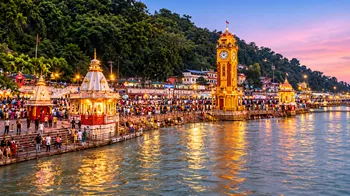
Karwa Chauth (करवा चौथ) is one of the most celebrated Hindu festivals, particularly among married women in northern and western India. The festival represents love, devotion, marital companionship, faith and prayers for the well-being and longevity of one's spouse.
1. Karwa Chauth 2026: Date and important timings
Karwa Chauth falls on the Chaturthi Tithi of Krishna Paksha in the Hindu month of Kartik, according to the Purnimanta lunar calendar followed in much of northern India. In other regional calendar systems, the corresponding month may be called Ashwin.
- Festival date : Thursday, 29 October 2026
- Chaturthi begins : 29 October, 01:06 AM
- Chaturthi ends : 29 October, 10:09 PM
- Puja Muhurat (Delhi) : 05:38 PM to 06:56 PM
- Expected moonrise (Delhi) : Approximately 08:17 PM
- Fasting Period : Sunrise until moon sighting
All times are in Indian Standard Time (IST). Panchang calculations can vary slightly between sources.
Karwa Chauth 2026: City-wise moonrise timings
The time of moonrise is especially important because devotees traditionally complete their fast after offering prayers to the moon.
City Expected moonrise New Delhi 08:17 PM Jaipur 08:28 PM Chandigarh 08:12 PM Lucknow 08:06 PM Mumbai 09:00 PM Pune 08:58 PM Ahmedabad 08:52 PM Kolkata 07:47 PM Hyderabad 08:41 PM Bengaluru 08:55 PM Chennai 08:44 PM
2. What is Karwa Chauth ? Meaning and significance
The name Karwa Chauth comes from two words:
- Karwa (करवा): An earthen pot or vessel traditionally used to hold water during religious rituals.
- Chauth (चौथ): The fourth day of a lunar fortnight, referring to Chaturthi.
The festival has deep roots in the cultural and religious traditions of northern India.
Traditionally, women observe the fast for their husbands' long life, health and prosperity. In contemporary celebrations, some couples also fast together as an expression of mutual commitment.
The festival represents several important values, including devotion, family relationships, marital companionship, gratitude and community bonding.
It also offers an opportunity for married women to participate in collective worship, exchange gifts, share stories and celebrate family traditions.
3. History and origin of Karwa Chauth
The exact historical origin of Karwa Chauth is not firmly established. Its traditions have developed through regional customs, oral storytelling, religious practices and family celebrations over generations.
Several explanations are associated with the festival.
Connection with agricultural communities
One traditional explanation connects Karwa Chauth with the agricultural cycle in northern India.
The festival occurs around the autumn harvest season, when families historically gathered to celebrate agricultural prosperity and prepare for the coming months.
Earthen pots were important household objects for storing water and grains. Over time, the karwa became an important ceremonial symbol.
This agricultural explanation is a cultural interpretation rather than a conclusively documented origin.
Tradition of friendship and sisterhood
Another explanation associates Karwa Chauth with the custom of forming close bonds between women through ritual friendship.
Historically, married women sometimes moved far from their parental homes after marriage. Friendships with other married women provided companionship and support.
Collective Karwa Chauth celebrations helped strengthen these relationships through shared rituals, storytelling and gift exchanges.
Religious and mythological connections
Karwa Chauth is associated with several traditional stories involving devotion, courage, loyalty and faith.
Among the best-known are the stories of Queen Veeravati, the devoted wife Karwa, and Savitri and Satyavan.
These narratives are traditionally recited or discussed during the festival. They should be understood as religious and cultural stories rather than verified historical events.
4. Karwa Chauth Vrat Katha: The story of Queen Veeravati
The story of Queen Veeravati is among the most popular legends associated with Karwa Chauth.
According to the traditional narrative, Veeravati was the beloved sister of seven brothers. After her marriage, she observed her first Karwa Chauth fast.
Because she was not accustomed to fasting, she became extremely weak as the day progressed.
Her brothers were deeply concerned about her condition and wanted her to eat.
In one popular version of the story, the brothers created an artificial light behind a tree to make it appear that the moon had risen.
Believing the moon had appeared, Veeravati broke her fast before the proper time.
According to the legend, she subsequently learned that her husband had suffered a grave misfortune. Through devotion, prayers and the guidance of divine figures, she eventually restored his life or well-being, depending on the regional version.
Moral of the story
The traditional story emphasizes faith, patience, determination and the importance of completing religious observances sincerely.
Different communities narrate variations of this legend, so some details may differ between families.
5. The story of Karwa and her husband
Another popular Karwa Chauth legend concerns a devoted woman named Karwa. According to the story, Karwa lived with her husband near a river. One day, while her husband was bathing, a crocodile attacked him.
Karwa rushed to save him and, through her determination and spiritual devotion, bound the crocodile using cotton thread. She then appealed to Yama, the Hindu deity associated with death and justice, to protect her husband and punish the crocodile.
The legend describes how her devotion ultimately saved her husband's life. This story symbolizes courage, loyalty and the protective power of devotion in Hindu religious tradition.
6. Savitri and Satyavan: A story associated with marital devotion
The story of Savitri and Satyavan is another well-known Hindu narrative frequently associated with marital loyalty.
According to the Mahabharata, Savitri married Satyavan despite learning that he was destined to die young.
When Yama came to take Satyavan's life, Savitri followed him and engaged him in a conversation demonstrating wisdom, devotion and determination.
Impressed by her intelligence and persistence, Yama granted her boons that ultimately enabled Satyavan's life to be restored.
Although Savitri's story is more directly associated with Vat Savitri observances, it is also discussed in the broader cultural context of Karwa Chauth.
7. Karwa Chauth Puja Samagri: Complete list of worship materials
The materials required for Karwa Chauth puja can vary according to regional and family traditions.
Traditional Puja Samagri Checklist
- Karwa (earthen or metal water pot)
- Puja thali (worship plate)
- Diya and cotton wicks
- Roli, kumkum and haldi
- Akshat (unbroken rice and grains)
- Flowers and incense sticks
- Kalash with clean water
- Chalni (sieve)
- Fruits and sweets
- Ghee or oil for the diya
- Images or idols of Shiva, Parvati and Ganesha
- Red cloth and decorative items
- Offerings such as mathri or other traditional foods
- Karwa Chauth Vrat Katha text
- Sindoor, bangles and other customary suhag items
8. Karwa Chauth Puja Vidhi: Step-by-step procedure
Step 1: Wake up early and eat Sargi
Women who follow the Sargi tradition wake up before sunrise. Sargi is traditionally prepared or gifted by the mother-in-law and may include fruits, nuts, sweets, parathas and other foods. It is eaten before the fast begins.
Step 2: Take the fasting Sankalp
After bathing and preparing for the day, devotees may make a religious resolution, or Sankalp, to observe the vrat and pray for the well-being of their family.
Step 3: Prepare the puja area
In the evening, clean the worship area, arrange the puja materials, place the karwa and prepare the diya. Images or idols of Lord Shiva, Goddess Parvati and Lord Ganesha are commonly placed for worship.
Step 4: Perform evening puja and listen to the Vrat Katha
Women worship the deities, offer flowers and other customary materials, and listen to the Karwa Chauth Vrat Katha. In some communities, women sit in a circle and exchange or rotate their decorated thalis.
Step 5: Observe the moon and offer Arghya
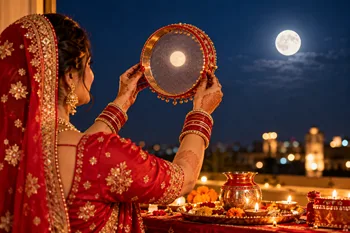
After moonrise, devotees traditionally look at the moon through a sieve or according to their family's custom. Water is offered to the moon as Arghya, accompanied by prayers.
Step 6: Break the fast
After completing the moon worship, the husband traditionally offers water and a sweet or food to his wife. The couple then shares a meal with family members.
9. What is Sargi in Karwa Chauth ?
Sargi is an important pre-dawn meal associated particularly with Punjabi Karwa Chauth celebrations. It is traditionally prepared or given by the mother-in-law as a gesture of affection and blessings.
Common Sargi foods include:
- Fresh fruits such as bananas, apples and pomegranates
- Dry fruits including almonds, dates and cashews
- Pheni or vermicelli prepared with milk
- Mathri, parathas or other traditional foods
- Homemade sweets and other family specialties
Sargi is consumed before sunrise, after which the traditional fast begins. The foods served vary across households, and not every community follows the Sargi tradition.
10. Karwa Chauth fasting rules and precautions
The traditional Karwa Chauth fast is known as a Nirjala Vrat, meaning a fast without food or water. However, religious practices vary, and fasting should always be approached with consideration for personal health.
Traditional fasting customs
Devotees commonly follow these practices:
- Begin fasting after the pre-dawn meal.
- Observe the fast during the day according to family tradition.
- Perform evening prayers and listen to the Vrat Katha.
- Wait for moonrise before completing the traditional fast.
- Offer Arghya to the moon and break the fast with water and food.
Important health precautions
A prolonged waterless fast can cause dehydration, dizziness and weakness, particularly in hot weather or for people with certain medical conditions.
Pregnant or breastfeeding women, people with diabetes or kidney conditions, older adults and people taking medications requiring food or water should seek medical advice before attempting a strict fast.
Anyone experiencing faintness, confusion, severe weakness or symptoms of dehydration should stop fasting and seek appropriate care. Religious observance should not come at the expense of health.
11. Why is the moon worshipped on Karwa Chauth ?
The moon, known as Chandra in Hindu tradition, holds religious and symbolic significance. In many Hindu religious practices, Chandra is associated with calmness, emotional balance and the passage of time.
On Karwa Chauth, moonrise marks the traditional completion of the fast. The moon worship typically includes offering water, praying for family well-being and seeking blessings for a harmonious married life.
The sieve, or chalni, has become one of the most recognizable elements of modern Karwa Chauth celebrations, although its use varies across regions.
12. Karwa Chauth in different Indian states
State or region Common traditions Punjab Sargi, mehndi, decorated thalis and group pujas Haryana Traditional fasting, community worship and moon rituals Rajasthan Karwa puja, folk traditions and family ceremonies Uttar Pradesh Vrat Katha, evening worship and moon offerings Delhi NCR Family gatherings, mehndi and traditional celebrations Himachal Pradesh Family-based fasting and puja customs Madhya Pradesh Regional variations of Chaturthi worship and fasting
13. Karwa Chauth attire, mehndi and decorations
- Traditional Clothing : Red, maroon, pink and other festive-colored sarees, lehengas and suits are popular.
- Mehndi designs : Floral, paisley, bridal and intricate henna designs are common.
- Puja thali decoration : Thalis are decorated with diyas, flowers, colorful fabrics and ceremonial items.
- Festive food : Families prepare special meals and sweets to enjoy after the evening rituals.
14. Popular foods prepared for Karwa Chauth
Food plays an important role in the celebrations, especially during Sargi and the meal after moonrise.
Popular dishes include:
Dish Description Pheni Fine vermicelli often prepared with milk Mathri Crispy savory snack Aloo Puri Potato curry served with fried bread Paneer dishes Popular vegetarian festive preparations Kheer Traditional milk-and-rice dessert Halwa Sweet dish prepared with semolina, flour or other ingredients Dry fruits Common components of Sargi Laddoo Traditional Indian sweets
15. Karwa Chauth mantras and prayers
During Karwa Chauth, devotees may chant prayers dedicated to Lord Shiva, Goddess Parvati, Lord Ganesha and Chandra Dev.
Some commonly recited mantras include:
Deity Mantra Meaning Lord Shiva ॐ नमः शिवाय Salutations to Lord Shiva Goddess Parvati ॐ पार्वत्यै नमः Salutations to Goddess Parvati Lord Ganesha ॐ गं गणपतये नमः Salutations to Lord Ganesha Chandra Dev ॐ सोमाय नमः Salutations to Soma, the Moon deity
16. How Karwa Chauth celebrations have changed
Although Karwa Chauth remains deeply rooted in religious customs, its celebrations have evolved.
Traditionally, the festival primarily involved married women fasting for their husbands.
Today, some couples choose to observe the fast together, while others celebrate through prayers, gifts, shared meals or family gatherings without undertaking a strict fast.
Social media has also influenced modern celebrations, with festive photography, mehndi designs, coordinated outfits and digital greetings becoming popular.
However, the central cultural themes of devotion, companionship, gratitude and family connection remain important to many participants.
17. Karwa Chauth wishes and messages
Families and couples often exchange greetings during the festival.
Traditional greeting: "May Karwa Chauth bring happiness, prosperity, good health and lasting love to your married life."
For husband or wife: "Every moment with you is a blessing. May our journey together always be filled with love, understanding and happiness. Happy Karwa Chauth!"
Hindi greeting: "करवा चौथ के पावन अवसर पर आपके वैवाहिक जीवन में प्रेम, विश्वास, सुख और समृद्धि बनी रहे। करवा चौथ की हार्दिक शुभकामनाएँ!"
18. Frequently asked questions about Karwa Chauth
When is Karwa Chauth in 2026 ?
Karwa Chauth will be celebrated on Thursday, 29 October 2026.
Is Karwa Chauth celebrated on the same date throughout India ?
It generally falls on the same civil date across India, but the local moonrise and puja timings differ. Dates can also differ in countries outside India because of time zones and local Panchang calculations.
Can unmarried women observe Karwa Chauth ?
Some unmarried women observe the festival according to personal belief or family tradition, although it is primarily associated with married women.
Can husbands observe Karwa Chauth ?
Yes. Some husbands voluntarily fast with their wives as a gesture of mutual commitment. This is not a universal traditional requirement.
Is it compulsory to observe a Nirjala fast ?
No. Religious observance is a personal choice, and practices differ. Individuals should adapt or avoid fasting when necessary for their health.
What happens if the moon is not visible ?
Clouds, buildings or other obstructions can delay moon sighting. Families may consult a local Panchang or follow guidance from their religious tradition about completing the ritual.
Which gods are worshipped on Karwa Chauth ?
Goddess Parvati, Lord Shiva, Lord Ganesha and Chandra Dev are commonly worshipped.
What is the difference between Karwa Chauth and Teej ?
Both festivals include traditions associated with marriage and devotion, but they occur on different dates and have distinct regional rituals, stories and forms of worship.
Karwa Chauth is an important cultural and religious festival that brings together faith, family traditions and the celebration of marital relationships.
From the early-morning Sargi to the evening puja and moon-sighting ceremony, every stage of the celebration carries symbolic meaning for those who observe it.
The festival also reflects the diversity of Indian customs, with different regions preserving their own rituals, stories, foods and celebrations.
In 2026, Karwa Chauth will be observed on Thursday, 29 October. Devotees planning to observe the traditional fast should check the local puja muhurat and moonrise time and prioritize their health.
Also Read :
Comments
0