


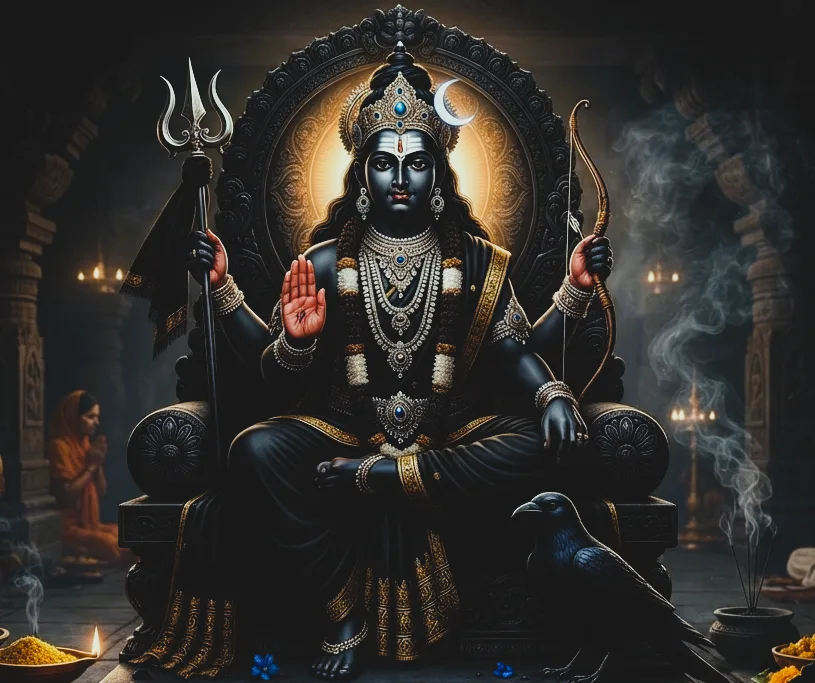
The Shani Chalisa is a Hindu devotional hymn dedicated to Lord Shani Dev, who is associated with the planet Saturn in Hindu astrology. Lord Shani is traditionally regarded as the son of Surya Dev (the Sun God) and Chhaya. He is associated with justice, discipline, karma, patience, and the consequences of one's actions.
Devotees recite the Shani Chalisa to express their devotion, seek spiritual guidance, and pray for strength and peace during difficult periods of life. The hymn contains 40 chaupais, preceded by two opening dohas and followed by a closing doha in the version presented here.
Below is the complete Shani Chalisa in Hindi, English transliteration, and verse-by-verse English meaning.
Opening Doha 1
| Hindi Doha | English Transliteration | Meaning in English |
|---|---|---|
| जय गणेश गिरिजा सुवन, मंगल करण कृपाल। दीनन के दुःख दूर करि, कीजै नाथ निहाल॥ | Jai Ganesh Girija Suvan, Mangal Karan Kripal। Deenan Ke Dukh Door Kari, Keejai Nath Nihal॥ | Salutations to Lord Ganesha, the compassionate son of Girija, who brings auspiciousness. May the Lord remove the sorrows of the humble and bless them with happiness. |
Opening Doha 2
| Hindi Doha | English Transliteration | Meaning in English |
|---|---|---|
| जय जय श्री शनिदेव प्रभु, सुनहु विनय महाराज। करहु कृपा हे रवि तनय, राखहु जन की लाज॥ | Jai Jai Shri Shanidev Prabhu, Sunahu Vinay Maharaj। Karahu Kripa He Ravi Tanay, Rakhahu Jan Ki Laaj॥ | Glory to Lord Shani Dev! Please hear this humble prayer, O great Lord. O Son of the Sun God, shower your grace and protect the honour of your devotees. |
Shani Chalisa: All 40 Chaupais in Hindi, English and Meaning
| No. | Hindi Chaupai | English Transliteration | Meaning in English |
|---|---|---|---|
| 1 | जयति जयति शनिदेव दयाला। करत सदा भक्तन प्रतिपाला॥ | Jayati Jayati Shanidev Dayala। Karat Sada Bhaktan Pratipala॥ | Glory to compassionate Lord Shani Dev, who is praised as the protector and guardian of his devotees. |
| 2 | चारि भुजा तनु श्याम विराजै। माथे रतन मुकुट छवि छाजै॥ | Chari Bhuja Tanu Shyam Virajai। Mathe Ratan Mukut Chhavi Chhajai॥ | Lord Shani is depicted with four arms, a dark complexion, and a beautiful crown adorned with precious jewels. |
| 3 | परम विशाल मनोहर भाला। टेढ़ी दृष्टि भृकुटि विकराला॥ | Param Vishal Manohar Bhala। Tedhi Drishti Bhrikuti Vikarala॥ | The verse describes his broad forehead, powerful sidelong gaze, and formidable expression. |
| 4 | कुण्डल श्रवण चमाचम चमके। हिये माल मुक्तन मणि दमके॥ | Kundal Shravan Chamacham Chamake। Hiye Mala Muktan Mani Damake॥ | Shining earrings adorn his ears, while a necklace of pearls and precious gems glitters on his chest. |
| 5 | कर में गदा त्रिशूल कुठारा। पल बिच करैं अरिहिं संहारा॥ | Kar Mein Gada Trishul Kuthara। Pal Bich Karain Arihin Sanhara॥ | He holds a mace, trident, and axe, symbolising the power to overcome hostile forces. |
| 6 | पिंगल, कृष्णों, छाया-नन्दन। यम, कोणस्थ, रौद्र, दुःख भंजन॥ | Pingal, Krishno, Chhaya-Nandan। Yama, Konastha, Raudra, Dukh Bhanjan॥ | The verse recites traditional names of Shani Dev, including Pingal, the son of Chhaya, Raudra, and Dukh Bhanjan, the remover of sorrow. |
| 7 | सौरी, मन्द, शनि, दशनामा। भानु पुत्र पूजहिं सब कामा॥ | Sauri, Manda, Shani, Dashanama। Bhanu Putra Poojahi Sab Kama॥ | Shani Dev is also known by names such as Sauri and Manda. As the son of Surya, he is worshipped by devotees seeking his blessings. |
| 8 | जा पर प्रभु प्रसन्न हवै जाहीं। रंकहुँ राव करैं क्षण माहीं॥ | Ja Par Prabhu Prasanna Havai Jahin। Rankahun Raav Karain Kshan Mahin॥ | The hymn expresses the belief that Shani Dev's favour can transform the circumstances of even the poorest person. |
| 9 | पर्वतहू तृण होई निहारत। तृणहू को पर्वत करि डारत॥ | Parvatahu Trin Hoi Niharat। Trinahu Ko Parvat Kari Darat॥ | His gaze is described as having the power to change circumstances, making a mountain seem like a blade of grass or a blade of grass like a mountain. |
| 10 | राज मिलत बन रामहिं दीन्हो। कैकेइहुं की मति हरि लीन्हो॥ | Raj Milat Ban Ramahin Deenho। Kaikeihun Ki Mati Hari Leenho॥ | The hymn connects Lord Rama's exile, which occurred around the time of his expected coronation, and Kaikeyi's changed decision with Shani's influence. |
| 11 | बनहूँ में मृग कपट दिखाई। मातु जानकी गई चुराई॥ | Banahun Mein Mrig Kapat Dikhai। Matu Janaki Gai Churai॥ | The verse recalls the Ramayana episode in which a deceptive golden deer appears in the forest and Goddess Sita is abducted. |
| 12 | लखनहिं शक्ति विकल करि डारा। मचिगा दल में हाहाकारा॥ | Lakhanahin Shakti Vikal Kari Dara। Machiga Dal Mein Hahakara॥ | Lakshmana is struck down by a powerful weapon, causing grief and confusion among Lord Rama's army. |
| 13 | रावण की गति मति बौराई। रामचन्द्र सों बैर बढ़ाई॥ | Ravan Ki Gati Mati Baurai। Ramchandra Son Bair Badhai॥ | Ravana's judgement is portrayed as clouded, leading him to deepen his hostility toward Lord Rama. |
| 14 | दियो कीट करि कंचन लंका। बजि बजरंग वीर की डंका॥ | Diyo Keet Kari Kanchan Lanka। Baji Bajrang Veer Ki Danka॥ | The glory of golden Lanka is reduced, while the fame of mighty Hanuman resounds. |
| 15 | नृप विक्रम पर तुहि पगु धारा। चित्र मयूर निगलि गै हारा॥ | Nrip Vikram Par Tuhi Pagu Dhara। Chitra Mayur Nigali Gai Hara॥ | The hymn recalls the traditional story of King Vikramaditya, whose troubles begin when a peacock depicted in a picture appears to swallow a valuable necklace. |
| 16 | हार नौलाखा लाग्यो चोरी। हाथ पैर डरवायो तोरी॥ | Haar Naulakha Lagyo Chori। Hath Pair Darvayo Tori॥ | The valuable necklace is believed to have been stolen, and the king undergoes a severe ordeal in which his hands and feet are cut off. |
| 17 | भारी दशा निकृष्ट दिखायो। तेलिहिं घर कोल्हू चलवायो॥ | Bhari Dasha Nikrishta Dikhayo। Telihin Ghar Kolhu Chalavayo॥ | The king's difficult period continues, and he is forced to perform exhausting work at an oil-presser's house. |
| 18 | विनय राग दीपक महँ कीन्हों। तब प्रसन्न प्रभु हवै सुख दीन्हों॥ | Vinay Raag Deepak Mahan Keenhon। Tab Prasanna Prabhu Havai Sukh Deenhon॥ | After the king humbly sings Raga Deepak, the Lord becomes pleased, and the story turns toward relief and happiness. |
| 19 | हरिश्चन्द्र नृप नारि बिकानी। आपहुँ भरे डोम घर पानी॥ | Harishchandra Nrip Nari Bikani। Aapahun Bhare Dom Ghar Pani॥ | The verse recalls the trials of King Harishchandra, whose wife is sold and who himself serves in the household of a cremation-ground worker. |
| 20 | तैसे नल पर दशा सिरानी। भूंजी-मीन कूद गई पानी॥ | Taise Nal Par Dasha Sirani। Bhoonji-Meen Kood Gai Pani॥ | The misfortunes of King Nala are recalled through the traditional story of a cooked fish leaping back into the water. |
| 21 | श्री शंकरहिं गहयो जब जाई। पार्वती को सती कराई॥ | Shri Shankarahin Gahayo Jab Jai। Parvati Ko Sati Karai॥ | This verse links Shani's testing influence with the mythological episode involving Sati's death and Lord Shiva's grief. |
| 22 | तनिक विलोकत ही करि रीसा। नभ उड़ि गयो गौरिसुत सीसा॥ | Tanik Vilokat Hi Kari Reesa। Nabh Udi Gayo Gaurisut Seesa॥ | The verse recalls a mythological account in which a glance is associated with the severing of the head of Gauri's son, Lord Ganesha. |
| 23 | पाण्डव पर भै दशा तुम्हारी। बची द्रौपदी होति उघारी॥ | Pandav Par Bhai Dasha Tumhari। Bachi Draupadi Hoti Ughari॥ | The hardships of the Pandavas are recalled, including the episode in which Draupadi is saved from humiliation in the royal assembly. |
| 24 | कौरव के भी गति मति मारयो। युद्ध महाभारत करि डारयो॥ | Kaurav Ke Bhi Gati Mati Marayo। Yuddha Mahabharat Kari Darayo॥ | The verse describes the Kauravas' judgement as failing, leading toward the devastating Mahabharata war. |
| 25 | रवि कहँ मुख महँ धरि तत्काला। लेकर कूदि परयो पाताला॥ | Ravi Kahan Mukh Mahan Dhari Tatkala। Lekar Koodi Parayo Patala॥ | In a mythological episode, Shani takes the Sun God into his mouth and leaps toward the netherworld. |
| 26 | शेष देव-लखि विनती लाई। रवि को मुख ते दियो छुड़ाई॥ | Shesh Dev-Lakhi Vinati Lai। Ravi Ko Mukh Te Diyo Chhudai॥ | Seeing what has happened, the other gods offer prayers, and the Sun God is released from Shani's mouth. |
| 27 | वाहन प्रभु के सात सुजाना। जग दिग्गज गर्दभ मृग स्वाना॥ | Vahan Prabhu Ke Saat Sujana। Jag Diggaj Gardabh Mrig Svana॥ | The hymn begins describing the traditional vehicles associated with Shani Dev, including an elephant, donkey, deer, and dog. |
| 28 | जम्बुक सिंह आदि नखधारी। सो फल ज्योतिष कहत पुकारी॥ | Jambuk Singh Adi Nakhadhari। So Phal Jyotish Kahat Pukari॥ | Jackals, lions, and other clawed animals are also mentioned. The verse says that traditional astrology associates different meanings with these vehicles. |
| 29 | गज वाहन लक्ष्मी गृह आवैं। हय ते सुख सम्पत्ति उपजावैं॥ | Gaj Vahan Lakshmi Griha Avain। Haya Te Sukh Sampatti Upajavain॥ | According to the hymn's astrological tradition, the elephant is associated with prosperity entering the home, while the horse is associated with comfort and wealth. |
| 30 | गर्दभ हानि करै बहु काजा। सिंह सिद्धकर राज समाजा॥ | Gardabh Hani Karai Bahu Kaja। Singh Siddhakar Raj Samaja॥ | The verse associates the donkey with setbacks and the lion with success and recognition in society. |
| 31 | जम्बुक बुद्धि नष्ट कर डारै। मृग दे कष्ट प्राण संहारै॥ | Jambuk Buddhi Nashta Kar Darai। Mrig De Kashta Pran Sanharai॥ | In the hymn's astrological descriptions, the jackal is associated with loss of judgement and the deer with severe suffering and danger. |
| 32 | जब आवहिं प्रभु स्वान सवारी। चोरी आदि होय डर भारी॥ | Jab Avahin Prabhu Svan Savari। Chori Adi Hoi Dar Bhari॥ | When Shani is depicted riding a dog, the verse associates this image with fear of theft and other troubles. |
| 33 | तैसहि चारि चरण यह नामा। स्वर्ण लौह चाँदी अरु तामा॥ | Taisahi Chari Charan Yah Nama। Svarna Lauh Chandi Aru Tama॥ | The hymn describes four symbolic phases or states associated with gold, iron, silver, and copper. |
| 34 | लौह चरण पर जब प्रभु आवैं। धन जन सम्पत्ति नष्ट करावैं॥ | Lauh Charan Par Jab Prabhu Avain। Dhan Jan Sampatti Nashta Karavain॥ | The iron phase is traditionally portrayed as a difficult period involving possible losses in wealth, possessions, and worldly circumstances. |
| 35 | समता ताम्र रजत शुभकारी। स्वर्ण सर्वसुख मंगल कारी॥ | Samata Tamra Rajat Shubhakari। Svarna Sarvasukh Mangal Kari॥ | Copper and silver phases are described as favourable, while gold symbolises auspiciousness, well-being, and happiness. |
| 36 | जो यह शनि चरित्र नित गावै। कबहुँ न दशा निकृष्ट सतावै॥ | Jo Yah Shani Charitra Nit Gavai। Kabahun Na Dasha Nikrishta Satavai॥ | The hymn expresses the devotional belief that regularly singing Shani's praises protects devotees during adverse periods. |
| 37 | अद्भुत नाथ दिखावैं लीला। करैं शत्रु के नशि बलि ढीला॥ | Adbhut Nath Dikhavain Leela। Karain Shatru Ke Nashi Bali Dheela॥ | The verse praises the wondrous Lord whose divine actions weaken destructive opposition and hostile forces. |
| 38 | जो पण्डित सुयोग्य बुलवाई। विधिवत शनि ग्रह शांति कराई॥ | Jo Pandit Suyogya Bulavai। Vidhivat Shani Graha Shanti Karai॥ | The verse describes the traditional practice of inviting a knowledgeable priest to perform a Shani Graha Shanti ritual. |
| 39 | पीपल जल शनि दिवस चढ़ावत। दीप दान दै बहु सुख पावत॥ | Peepal Jal Shani Divas Chadhavat। Deep Daan Dai Bahu Sukh Pavat॥ | The verse mentions offering water to a peepal tree and lighting or donating a lamp on Saturday as devotional practices associated with well-being. |
| 40 | कहत रामसुन्दर प्रभु दासा। शनि सुमिरत सुख होत प्रकाशा॥ | Kahat Ramsundar Prabhu Dasa। Shani Sumirat Sukh Hot Prakasha॥ | The concluding verse names Ramsundar as the servant of the Lord and says that remembering Shani brings the light of happiness. |
Closing Doha
| Hindi Doha | English Transliteration | Meaning in English |
|---|---|---|
| पाठ शनिश्चर देव को, की हों विमल तैयार। करत पाठ चालीस दिन, हो भवसागर पार॥ | Path Shanichar Dev Ko, Ki Hon Vimal Taiyar। Karat Path Chalis Din, Ho Bhavasagar Paar॥ | The closing verse encourages devotees to approach the worship of Lord Shani with a pure heart. It expresses the devotional promise that reciting the Chalisa for forty days can help a person cross the ocean of worldly existence. |
Who Is Lord Shani Dev?
Lord Shani Dev is one of the Navagraha, the nine celestial influences worshipped in Hindu tradition. He is traditionally described as the son of Surya Dev and Chhaya and is associated with discipline, responsibility, justice, patience, and karma.
In Hindu astrology, Shani is linked with Saturn and is believed to represent the consequences of one's actions. Devotees worship Shani Dev to seek guidance, patience, inner strength, and the ability to face life's challenges with integrity.
Significance of Shani Chalisa
The Shani Chalisa praises Lord Shani Dev and recounts traditional stories involving kings, deities, and other important figures. These stories highlight the uncertainty of worldly fortune, the importance of humility, and the value of faith during difficult circumstances.
Its significance includes:
Faith and devotion: The Chalisa gives devotees a way to express their reverence for Shani Dev.
Karma and responsibility: Its themes encourage reflection on actions and their consequences.
Patience during hardship: The stories remind readers that difficult periods can test a person's character.
Humility and discipline: Shani is traditionally associated with responsibility, honesty, and perseverance.
Spiritual reflection: Regular recitation can provide a structured opportunity for prayer and contemplation.
Traditional Benefits of Reciting Shani Chalisa
Devotees traditionally believe that reciting the Shani Chalisa can help them seek Shani Dev's blessings and find spiritual reassurance.
Commonly described devotional benefits include:
Peace of mind: Prayer may offer comfort during stressful periods.
Patience and perseverance: The hymn encourages devotees to face challenges with discipline.
Spiritual confidence: Recitation can strengthen a person's sense of faith and hope.
Reflection on karma: Its themes encourage people to act responsibly and honestly.
Devotional discipline: Regular prayer can become a meaningful part of a daily or weekly routine.
Seeking blessings during difficult times: Devotees often turn to Shani Dev when facing uncertainty or hardship.
These are traditional spiritual beliefs, not guaranteed outcomes. Reciting the Chalisa should not replace practical action, professional advice, or medical or financial support when needed.
How to Recite Shani Chalisa
Many devotees recite the Shani Chalisa on Saturdays, although it can be read on any day according to personal faith and family tradition.
Choose a peaceful place: Sit comfortably in a clean area where you can focus.
Begin with a prayer: You may start with a short prayer to Lord Ganesha before remembering Shani Dev.
Read the complete Chalisa: Recite the Hindi verses or use the English transliteration to help with pronunciation.
Understand the meaning: Reflect on the themes of responsibility, patience, justice, and devotion.
Follow your tradition: Some devotees light a lamp or make simple offerings on Saturdays. Follow safe practices and your own family tradition.
Conclude with a prayer: Ask for wisdom, strength, and the ability to act with honesty and compassion.
There is no need to rush through the verses. A calm, attentive recitation is a meaningful way to approach the prayer.
Frequently Asked Questions (FAQs)
1. Who is Shani Dev?
Shani Dev is a Hindu deity associated with Saturn and one of the Navagraha. He is traditionally regarded as the son of Surya Dev and Chhaya and is associated with karma, justice, discipline, and responsibility.
2. How many verses are there in Shani Chalisa?
The version presented here contains 40 chaupais, two opening dohas, and one closing doha.
3. What is the meaning of Shani Chalisa?
The Shani Chalisa praises Lord Shani Dev, describes his traditional form and names, recounts stories of hardship, and expresses the devotee's prayers for grace and spiritual strength.
4. When should Shani Chalisa be recited?
Many devotees prefer Saturday, a day traditionally associated with Shani Dev. However, it can be recited on any day as part of one's devotional practice.
5. Can beginners read Shani Chalisa in English?
Yes. Beginners can read the English transliteration to follow the pronunciation and use the English meanings to understand each verse.
6. What is Shani Sade Sati?
In Hindu astrology, Sade Sati refers to a period of approximately seven and a half years associated with Saturn's transit through the zodiac sign before one's natal Moon sign, the Moon sign itself, and the sign after it. Interpretations vary, and astrological predictions should not be treated as certain outcomes.
7. Does reciting Shani Chalisa guarantee relief from problems?
No guaranteed outcome can be promised. Devotees may find comfort, hope, and a sense of discipline through prayer, but practical decisions and appropriate professional support remain important.
8. Who composed the Shani Chalisa?
The version presented here includes a concluding signature verse naming Ramsundar. However, a definitive historical biography or independently verified authorship is not firmly established, and versions of the hymn may differ.
Conclusion
The Shani Chalisa is an important devotional hymn for people who worship Lord Shani Dev. Through its forty chaupais, it describes Shani's traditional form, recounts stories of trials and changing fortunes, and encourages reflection on karma, patience, humility, and responsibility.
Reading the Shani Chalisa in Hindi, following the English transliteration, and understanding its meaning can help devotees connect more deeply with its message. Whether recited on Saturday or another day, it can be a meaningful part of a personal spiritual routine.
Jai Shani Dev
Comments
0