




Chhath Puja 2026: Date and four-day festival calendar
In 2026, Chhath Puja will be celebrated from Friday, November 13, to Monday, November 16. The main Sandhya Arghya ritual will take place on November 15, followed by Usha Arghya on November 16.
| Day | Date | Ritual | Significance |
|---|---|---|---|
| Day 1 | November 13, Friday | Nahay Khay | Purification and preparation |
| Day 2 | November 14, Saturday | Lohanda and Kharna | Fasting and evening worship |
| Day 3 | November 15, Sunday | Sandhya Arghya | Offering prayers to the setting Sun |
| Day 4 | November 16, Monday | Usha Arghya and Parana | Offering prayers to the rising Sun and ending the fast |
What is the significance of Chhath Puja ?
Chhath Puja is dedicated to Lord Surya, who is regarded as the source of energy, life, health and prosperity. According to Hindu beliefs, the Sun God sustains life on Earth and provides the energy necessary for all living beings.
Devotees also worship Chhathi Maiya, who is associated with the protection of children, family happiness, health and prosperity.
The festival carries several important messages:
- Gratitude towards nature: Worshipping the Sun expresses gratitude for the natural resources that sustain life.
- Family well-being: Devotees pray for the long life, good health and prosperity of their children and family members.
- Discipline and dedication: The strict fasting and rituals demonstrate self-control, determination and devotion.
- Purity and cleanliness: Cleaning homes, preparing food carefully and maintaining ritual purity are essential aspects of the festival.
- Equality and community spirit: People from different social backgrounds gather together at riverbanks and water bodies to offer prayers.
One of the most distinctive features of Chhath Puja is that devotees worship the setting Sun as well as the rising Sun. This represents gratitude for the entire cycle of life and nature.
History and mythological stories associated with Chhath Puja
Chhath Puja is considered an ancient tradition of Sun worship in India. Its exact historical origin is difficult to establish, but the festival has been deeply rooted in the cultural and religious traditions of Bihar, Jharkhand and eastern Uttar Pradesh for generations.
Several mythological stories are associated with the celebration.
1. Karna and Sun God
According to a popular belief, Karna, the son of Surya Dev in the Mahabharata, was a devoted worshipper of the Sun God. He regularly offered prayers while standing in water and presented Arghya to the Sun.
His devotion and discipline are often associated with the traditions of Chhath Puja.
2. Draupadi and the Pandavas
Another popular story connects Chhath Puja with Draupadi and the Pandavas. According to traditional accounts, Draupadi observed religious rituals and worshipped the Sun God during difficult times to seek protection, strength and prosperity for her family.
3. Lord Rama and Goddess Sita
According to another traditional account, Lord Rama and Goddess Sita worshipped the Sun God after returning to Ayodhya following their exile. Their observance is associated with the tradition of Chhath Puja.
4. Chhathi Maiya and the protection of children
Chhathi Maiya is worshipped as a protective maternal deity. Devotees believe that she blesses children with good health, longevity and happiness and protects families from difficulties.
These stories are part of the religious traditions associated with the festival, and their details vary across communities.
Four days of Chhath Puja and their rituals
Chhath Puja is observed over four days. Each day has its own religious significance and traditional practices.
Day 1: Nahay Khay – November 13, 2026
Nahay Khay marks the beginning of Chhath Puja. On this day, devotees take a holy bath, clean their homes and prepare themselves for the upcoming rituals.
The person observing the Chhath fast, commonly known as the Vratin, prepares a simple and pure meal.
Traditional food generally includes:
- Rice.
- Chana dal.
- Bottle gourd (lauki or kaddu).
- Other permitted vegetables prepared according to family traditions.
Food is prepared with particular care, traditionally without onion and garlic. The meal is consumed after completing the necessary rituals.
The main purpose of Nahay Khay is to purify the body and surroundings before beginning the strict religious observance.
Day 2: Lohanda and Kharna – November 14, 2026
The second day is known as Lohanda and Kharna. Devotees observe a day-long fast and do not consume food or water during the fasting period, according to their traditional observance.
In the evening, after worship, the fast is broken with a special meal.
The traditional Kharna prasad includes:
- Jaggery-based rice kheer.
- Chapati or roti.
- Bananas and other fruits.
The prasad is first offered as part of the worship and then distributed among family members and devotees.
After Kharna, the Vratin begins the rigorous fast that continues until the completion of the morning Arghya on the fourth day. This period is commonly described as a 36-hour fast.
Day 3: Sandhya Arghya – November 15, 2026
The third day is considered one of the most important parts of Chhath Puja.
Devotees prepare traditional offerings and decorate bamboo baskets known as Soop and Daura. These baskets contain fruits, Thekua, sugarcane and other sacred offerings.
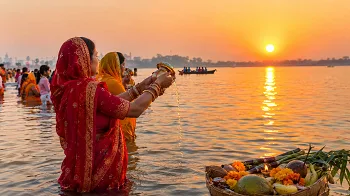
In the evening, devotees visit riverbanks, ponds, lakes or other designated water bodies. They stand in the water and offer Arghya to the setting Sun while chanting prayers and singing traditional Chhath songs.
This ritual is known as Sandhya Arghya.
Families accompany the devotees, and the atmosphere becomes spiritual and festive with traditional songs, earthen lamps and devotional prayers.
Day 4: Usha Arghya and Parana – November 16, 2026
The fourth and final day marks the conclusion of Chhath Puja.
Devotees wake up early in the morning, often before sunrise, and reach the riverbank or designated water body with their offerings. They stand in the water and offer Arghya to the rising Sun. This ritual is known as Usha Arghya.
After completing the prayers, devotees seek blessings from Chhathi Maiya and Surya Dev for the health, happiness and prosperity of their families.
The Vratin then breaks the fast through a ritual known as Parana. Traditional prasad is distributed among family members, relatives, neighbours and other devotees.
With this ritual, the four-day Chhath Puja festival comes to an end.
Important offerings and traditional foods of Chhath Puja
Food and offerings play a very important role in Chhath Puja. Most offerings are prepared at home while following traditional rules of cleanliness and purity.
Some of the most popular offerings include:
| Offering | Significance |
|---|---|
| Thekua | Traditional sweet offered to Surya Dev and Chhathi Maiya |
| Sugarcane | Represents prosperity and abundance |
| Coconut | Considered an auspicious offering |
| Banana | An essential fruit in many traditional offerings |
| Rice | Used in traditional preparations and rituals |
| Jaggery | Used to prepare Kharna prasad and sweets |
| Fruits | Offered as a symbol of gratitude and devotion |
| Ginger and turmeric | Included in traditional offerings in several regions |
Thekua is particularly important during Chhath Puja. It is prepared using wheat flour, jaggery and ghee, then shaped and fried. It is one of the most recognisable traditional foods associated with the festival.
How is Chhath Puja celebrated across India ?
Although Chhath Puja originated in the cultural traditions of eastern India, it is now celebrated in several parts of the country.
- Bihar: Patna, Muzaffarpur, Gaya, Bhagalpur and other cities witness large-scale celebrations.
- Jharkhand: Devotees gather at rivers, ponds and designated water bodies across Ranchi, Jamshedpur and other cities.
- Uttar Pradesh: The festival is particularly popular in eastern Uttar Pradesh, including Varanasi, Gorakhpur and surrounding districts.
- Delhi: Large gatherings take place at designated ghats and water bodies, especially among communities from Bihar and eastern Uttar Pradesh.
- Maharashtra: Chhath Puja is celebrated in Mumbai and other cities by people who have migrated from eastern India.
- Nepal: The festival is widely observed in the Terai region, where devotees perform traditional Sun worship.
Chhath celebrations are also organized in countries such as Mauritius, the United Kingdom, the United States, Canada and other places where communities of Indian origin live.
Important rules and traditions followed during Chhath Puja
Chhath Puja is known for its strict rules and disciplined observance. Devotees follow several traditional practices throughout the four-day festival.
- Cleanliness: Homes, kitchens and places of worship are thoroughly cleaned before the festival.
- Purity of food: Prasad is prepared with particular care, using clean utensils and ingredients.
- Traditional cooking: Many families prepare offerings using traditional methods and avoid onion and garlic.
- Fasting: Devotees observe strict fasts according to their family and religious traditions.
- Devotion to the Sun: Both the setting and rising Sun are worshipped through Arghya.
- Avoiding unnecessary consumption: The fasting period involves restraint and discipline.
- Sharing prasad: Offerings are distributed among family members, friends, neighbors and other devotees.
Fasting practices can differ between individuals and families. People with medical conditions, pregnant women and those who may be at risk from prolonged fasting should seek appropriate medical advice rather than attempting a strict fast.
Environmental significance of Chhath Puja
Chhath Puja also carries an important environmental message. The festival encourages people to respect nature and recognise the importance of the Sun, rivers, water bodies and other natural resources.
Since most rituals take place near rivers, ponds and lakes, maintaining the cleanliness of these water bodies is particularly important.
Devotees and organizers can contribute by:
- Avoiding plastic decorations and disposable materials.
- Using natural and biodegradable offerings wherever possible.
- Keeping rivers and ponds clean.
- Avoiding the disposal of non-biodegradable materials into water bodies.
- Ensuring that public gathering areas remain clean after the celebrations.
The festival provides an opportunity to promote environmental awareness alongside religious traditions.
Why is the setting Sun worshipped during Chhath Puja ?
One of the most unique aspects of Chhath Puja is the worship of the setting Sun.
In many traditions, prayers are primarily offered to the rising Sun. However, Chhath Puja gives equal importance to the setting Sun.
Devotees express gratitude to the Sun God for providing energy and sustaining life throughout the day. They also recognise the importance of every phase of nature's cycle.
The following morning, devotees welcome the rising Sun with another offering, symbolising hope, renewal and the beginning of a new day.
This combination of Sandhya Arghya and Usha Arghya makes Chhath Puja distinctive among Hindu festivals.
Frequently asked questions (FAQs)
1. When is Chhath Puja in 2026 ?
Chhath Puja will be celebrated from November 13 to November 16, 2026. The main Sandhya Arghya will take place on November 15.
2. Why is Chhath Puja celebrated ?
Chhath Puja is celebrated to worship Surya Dev and Chhathi Maiya. Devotees seek blessings for good health, prosperity, family happiness and the well-being of their children.
3. Who is worshipped during Chhath Puja ?
Devotees worship Lord Surya, the Sun God, and Chhathi Maiya, who is traditionally associated with the protection and well-being of children and families.
4. How many days does Chhath Puja last ?
Chhath Puja lasts four days, beginning with Nahay Khay and ending with Usha Arghya and Parana.
5. Why do devotees offer Arghya to the setting Sun ?
Offering Arghya to the setting Sun expresses gratitude towards nature and the Sun God. It is followed by another offering to the rising Sun the next morning.
6. What is Kharna in Chhath Puja ?
Kharna is the second day of Chhath Puja. Devotees observe a fast throughout the day and break it in the evening after worship, traditionally with jaggery-based kheer and chapati.
7. What is the importance of Thekua during Chhath Puja ?
Thekua is a traditional sweet prepared using wheat flour, jaggery and ghee. It is an important prasad offered during Chhath Puja.
8. What is the meaning of Sandhya Arghya and Usha Arghya ?
Sandhya Arghya refers to offering prayers to the setting Sun, while Usha Arghya means offering prayers to the rising Sun.
9. Is Chhath Puja celebrated only in Bihar ?
No. Although Bihar is particularly associated with the festival, Chhath Puja is also widely celebrated in Jharkhand, Uttar Pradesh, Nepal, Delhi, Maharashtra and other parts of India.
10. How long do devotees observe the Chhath fast ?
After completing Kharna on the second day, devotees traditionally observe a waterless fast lasting approximately 36 hours, which concludes after Usha Arghya on the fourth day. Practices may vary.
Chhath Puja is much more than a religious festival. It represents faith, dedication, discipline, gratitude and respect for nature. Its four-day celebration brings families and communities together through traditional rituals, fasting, devotional songs and prayers to the Sun God.
The worship of both the setting and rising Sun makes this festival particularly special. Through Chhath Puja, devotees express their gratitude for the blessings of nature and pray for the happiness, health and prosperity of their families.
As Chhath Puja 2026 approaches, millions of devotees across India and abroad will once again come together at riverbanks and water bodies to celebrate this beautiful tradition.
Also Read :
Comments
0