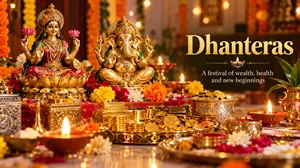
Dhanteras 2026: Important Date and Festival Details
Dhanteras is observed on the thirteenth lunar day (Trayodashi Tithi) of Krishna Paksha in the Hindu month of Kartika, according to the Amanta calendar commonly followed in much of India.
| Festival detail | Information |
|---|---|
| Festival name | Dhanteras / Dhantrayodashi |
| Dhanteras 2026 date | Friday, November 6, 2026 |
| Hindu month | Kartika |
| Lunar phase | Krishna Paksha Trayodashi |
| Main dieties | Lord Dhanvantari, Goddess Lakshmi, Lord Kubera |
| Major rituals | Lakshmi-Kubera Puja, Dhanvantari Puja, Yam Deep Daan |
| Traditional purchases | Gold, silver, utensils and other useful items |
| Main significance | Health, prosperity, wealth and protection |
| Diwali 2026 | Sunday, November 8, 2026 |
The word Dhanteras comes from two Sanskrit-derived words: Dhan, meaning wealth, and Teras, referring to the thirteenth lunar day.
Importantly, wealth in the context of Dhanteras is not limited to money. The festival also celebrates physical health, family happiness, peace, knowledge and spiritual prosperity.
History and Mythological Stories Behind Dhanteras
Dhanteras has deep roots in Hindu religious traditions. Several stories explain why the festival is celebrated and why it is associated with wealth, health and protection.
1. The appearance of Lord Dhanvantari during Samudra Manthan
One of the most important legends associated with Dhanteras comes from the Samudra Manthan, or churning of the cosmic ocean.
According to Hindu mythology, the Devas (gods) and Asuras (demons) joined forces to churn the ocean of milk in search of Amrita, the divine nectar of immortality. During this cosmic event, several sacred treasures and divine beings emerged from the ocean.
Among them was Lord Dhanvantari, traditionally depicted holding a vessel containing Amrita. Lord Dhanvantari is revered as the divine physician and is closely associated with Ayurveda, the traditional Indian system of medicine.
His appearance is commemorated on Dhanvantari Jayanti, observed on Dhanteras. This association gives Dhanteras an important message: good health is one of life's greatest forms of wealth.
2. The legend of King Hima's son and Yam Deep Daan
Another popular Dhanteras story explains the tradition of lighting a lamp for Lord Yama, the deity associated with death.
According to folklore, an astrologer predicted that the young son of King Hima would die from a snakebite on the fourth day of his marriage. Determined to protect her husband, the prince's newly married wife devised a plan.
She gathered her gold and silver ornaments and placed them near the entrance of their chamber. She then lit numerous lamps and kept her husband awake by telling stories and singing songs.
When Yama arrived in the form of a serpent, the brilliant light reflected from the ornaments and lamps reportedly prevented him from approaching the prince.
In some versions, the serpent remained listening to the stories until morning and departed without harming him. The prince survived, and the occasion became associated with lighting lamps for protection from untimely death.
This story is a traditional religious legend rather than a historically verified event.
3. Goddess Lakshmi and the significance of wealth
Goddess Lakshmi represents prosperity, abundance, good fortune and auspiciousness. In Hindu tradition, she is also associated with the Samudra Manthan narrative.
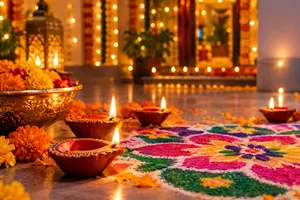
Devotees worship Goddess Lakshmi during Dhanteras to welcome positive energy and prosperity into their homes. Families traditionally clean their houses, decorate entrances with rangoli, light diyas and offer prayers to the goddess.
These customs symbolize the removal of negativity and the welcoming of auspicious beginnings.
Why Is Dhanteras Celebrated ?
Dhanteras carries several important religious and cultural meanings.
Prosperity and financial stability: Families pray to Goddess Lakshmi and Lord Kubera for financial security, success and responsible prosperity.
Health and well-being: Worship of Lord Dhanvantari highlights the importance of physical and mental wellness. Protection from misfortune: Yam Deep Daan is traditionally performed to seek protection against untimely death.
New beginnings: The festival is considered an auspicious occasion for purchases, household preparations and beginning positive activities.
Family unity: Decorating homes, preparing sweets, exchanging gifts and worshipping together strengthen family and community bonds.
Dhanteras Puja Vidhi: Step-by-Step Worship Procedure
Families follow different puja customs depending on their region and tradition. The following is a commonly followed household procedure.
Puja Samagri: Items Required
- Images or idols of Goddess Lakshmi, Lord Ganesha, Lord Dhanvantari and Lord Kubera
- A clean wooden platform and red or yellow cloth
- Earthen or brass diyas, ghee or oil, and cotton wicks
- Flowers, especially marigolds and lotus where available
- Kumkum, turmeric, sandalwood paste and akshat (unbroken rice)
- Incense sticks and camphor
- Fruits, sweets and other vegetarian offerings
- A kalash containing clean water
- Coins, ornaments or newly purchased utensils
Puja Procedure
- Step 1: Clean and decorate the house, Clean the prayer area and home. Decorate the entrance with rangoli, flowers and diyas.
- Step 2: Prepare the puja altar, Place a clean cloth on a raised platform and arrange the images or idols of the deities.
- Step 3: Light the diya, During the auspicious evening period, light a lamp and begin the prayers.
- Step 4: Offer prayers, Traditionally, worship begins with Lord Ganesha, followed by prayers to Goddess Lakshmi, Lord Kubera and Lord Dhanvantari.
- Step 5: Offer flowers, sweets and coins, Present flowers, fruits, sweets and symbolic items of wealth while reciting the appropriate prayers.
- Step 6: Perform aarti and Yam Deep Daan, Complete the worship with aarti and, according to family tradition, light a separate diya dedicated to Lord Yama.
Important Dhanteras Mantras
Goddess Lakshmi Mantra
| ॐ श्रीं महालक्ष्म्यै नमः॥ | Om Shreem Mahalakshmyai Namah | This mantra is recited in devotion to Goddess Lakshmi, seeking blessings for prosperity and auspiciousness. |
Lord Kubera Mantra
| ॐ कुबेराय नमः॥ | Om Kuberaya Namah | Lord Kubera is traditionally regarded as the guardian of wealth and treasures. |
Lord Dhanvantari Mantra
| ॐ धन्वंतरये नमः॥ | Om Dhanvantaraye Namah | Devotees chant this mantra as a prayer for health, healing and well-being. |
What Should You Buy on Dhanteras ?
Purchasing certain items on Dhanteras is considered auspicious in many Hindu households.
| Item | Traditional Significance |
|---|---|
| Gold jewellery or coins | Wealth, prosperity and financial security |
| Silver coins or ornaments | Purity, auspiciousness and prosperity |
| Brass or copper utensils | Household well-being and abundance |
| Steel utensils | Practical prosperity and new beginnings |
| Lakshmi-Ganesha idols | Devotion and blessings |
| Diyas | Light, hope and removal of darkness |
| Broom | Symbolic removal of poverty and negativity in some traditions |
| New household appliances | Comfort and progress in modern celebrations |
Is buying gold compulsory on Dhanteras ?
No. Buying gold is a popular custom, not a compulsory religious requirement.
Families may purchase silver, utensils, a small diya or another useful household item according to their financial circumstances.
The religious significance of Dhanteras lies primarily in worship, gratitude, well-being and auspicious intentions rather than expensive purchases.
What Should Be Avoided on Dhanteras ?
Several beliefs are associated with Dhanteras, although they vary by family, community and region. Some households traditionally avoid quarrels, wasteful spending, unnecessary negativity and activities they regard as inauspicious.
Certain communities also discourage purchasing sharp objects or lending money on this day. However, these are customary beliefs rather than universally prescribed Hindu rules.
There is no need to make unaffordable purchases or assume that failing to buy gold will bring misfortune.
Yam Deep Daan: Meaning and Significance
Yam Deep Daan is an important ritual performed on Dhanteras evening. It involves lighting a lamp dedicated to Lord Yama, who is associated with death and the moral order in Hindu tradition.
The ritual is traditionally believed to offer protection from Akal Mrityu, or untimely death.
How is Yam Deep Daan performed ?
A family may light an earthen lamp filled with mustard oil or another oil used in its tradition, place a cotton wick inside and offer a prayer to Lord Yama.
In many households, the lamp is placed outside the home, traditionally toward the south. The south is associated with Yama in Hindu religious symbolism.
The lamp should be kept in a safe location away from flammable materials and never left unattended.
Lord Dhanvantari and the Connection Between Dhanteras and Ayurveda
One of the most distinctive aspects of Dhanteras is its association with health. Lord Dhanvantari is revered as the divine physician and an important figure in the traditional history and mythology of Ayurveda.
The festival encourages devotees to value health alongside material prosperity.
Ayurveda Day in India was previously observed on Dhanteras. However, the Government of India changed its annual observance to September 23, beginning in 2025, to establish a fixed date independent of the changing lunar calendar.
Dhanvantari Jayanti nevertheless continues to be observed on Dhanteras according to Hindu tradition.
How Dhanteras Is Celebrated Across India
Dhanteras is celebrated in different ways across the country.
North India: Families commonly decorate homes with rangoli, purchase gold or silver, perform Lakshmi-Kubera Puja and light lamps.
Maharashtra: Dhantrayodashi marks the beginning of the Diwali celebrations, with Dhanvantari worship and traditional family observances.
Gujarat: The festival is associated with auspicious purchases, prayers and the broader Diwali period, which is especially important for business communities.
South India: Observances vary considerably. Some families worship Lord Dhanvantari and Goddess Lakshmi, while other Diwali rituals receive greater prominence.
Eastern India: Families may participate in Lakshmi worship, festive shopping and household preparations, although regional Diwali traditions differ.
Dhanteras and Diwali: What Is the Difference ?
Although closely related, Dhanteras and Diwali have distinct religious meanings.
| Dhanteras | Diwali |
|---|---|
| Marks the beginning of the Diwali festival period | Main festival of lights |
| Associated with Dhanvantari, Lakshmi and Kubera | Associated with Lakshmi Puja and various regional religious traditions |
| Focuses on health, prosperity and auspicious beginnings | Celebrates light, hope and the triumph of good over evil |
| Common customs include shopping and Yam Deep Daan | Common customs include lamps, prayers, sweets and family celebrations |
| November 6, 2026 | November 8, 2026 |
The traditional five-day Diwali period commonly includes Dhanteras, Naraka Chaturdashi, Diwali, Govardhan Puja or Annakut, and Bhai Dooj. The precise observance and sequence can vary by regional calendar.
Dhanteras Wishes and Greetings 2026
Share these festive messages with family and friends.
“May Goddess Lakshmi bless your home with prosperity, Lord Dhanvantari bless your family with good health, and Lord Kubera bring abundance into your life. Happy Dhanteras 2026!”
“On this auspicious occasion of Dhanteras, may every diya illuminate your life with happiness, success, peace and positivity.”
“शुभ धनतेरस! माँ लक्ष्मी और भगवान धन्वंतरि की कृपा से आपके जीवन में सुख, समृद्धि, उत्तम स्वास्थ्य और खुशहाली बनी रहे।”
Frequently Asked Questions About Dhanteras
When is Dhanteras in 2026 ?
Dhanteras will be celebrated on Friday, November 6, 2026.
What is the best time for Dhanteras Puja in 2026 ?
In New Delhi, the auspicious evening puja period is approximately 6:02 PM to 7:57 PM. The timing differs by city.
Which god is worshipped on Dhanteras ?
Lord Dhanvantari is central to Dhanteras, while Goddess Lakshmi and Lord Kubera are also widely worshipped. Lord Yama is honoured through Yam Deep Daan.
Why do people buy gold on Dhanteras ?
Gold is traditionally considered a symbol of wealth, prosperity and auspicious beginnings. Purchasing it is believed to invite good fortune.
Can we celebrate Dhanteras without buying anything ?
Yes. Worship, lighting lamps, gratitude, charity and spending time with family are meaningful ways to observe the festival.
Why is Dhanteras also called Dhanvantari Jayanti ?
According to Hindu mythology, Lord Dhanvantari appeared during the Samudra Manthan carrying the nectar of immortality. His appearance is commemorated on this day.
Is Dhanteras a public holiday in India ?
Dhanteras is not a uniform nationwide public holiday. Government offices, schools and businesses may follow different regional holiday schedules.
Dhanteras is much more than a festival associated with purchasing gold, silver and household goods. It is a celebration of health, prosperity, gratitude, spiritual devotion and family well-being.
The traditions of worshipping Lord Dhanvantari, Goddess Lakshmi and Lord Kubera remind devotees that genuine prosperity involves both material stability and good health.
As families prepare to celebrate Dhanteras on November 6, 2026, the festival offers an opportunity to welcome positivity, strengthen relationships and begin the Diwali celebrations with hope and devotion.
Happy Dhanteras 2026! Shubh Dhanteras!
Also Read :
Comments
0