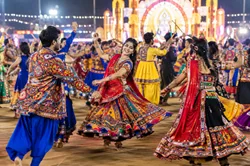
What Is Garba ?
Garba is a traditional Gujarati folk dance performed primarily in honor of Goddess Durga and her various forms, particularly during Navratri. The word is commonly associated with garbha, meaning the womb, and with the traditional earthen pot known as a garbo, which may contain a lamp.
Traditionally, dancers move in circular formations around a centrally placed image of the Goddess, a decorated shrine, or a lamp. The circular movement symbolizes the cycle of life, continuity, and the relationship between humanity and the divine.
Garba is not merely a form of entertainment. For many participants, it is an expression of faith, gratitude, cultural identity, and community spirit.
History and Origin of Garba
Garba originated in Gujarat, where folk traditions, devotional practices, and community celebrations have been passed down through generations. Its roots are closely connected with the worship of the Divine Feminine and the celebration of feminine energy, known in Hindu traditions as Shakti.
Historically, communities gathered during Navratri to sing devotional songs, worship the Goddess, and perform rhythmic dances. The traditional earthen pot with a lamp inside became an important symbol in certain forms of Garba. The light represents life, spiritual energy, and the divine presence.
Over time, Garba evolved through regional music, local customs, changing instruments, and new dance styles. Today, traditional folk performances coexist with modern arrangements featuring electronic music, amplified percussion, and contemporary choreography.
Although its style has changed over the years, Garba continues to preserve its connection with devotion, Gujarat's cultural heritage, and collective celebration.
Religious Significance of Garba
Garba is closely associated with the nine-day festival of Navratri, which celebrates the power and victory of the Goddess. During this period, devotees worship different forms of Goddess Durga and seek blessings for happiness, prosperity, courage, and well-being.
The main religious and cultural meanings of Garba include:
- Devotion to Goddess Durga: Garba is performed as an offering of devotion to the Divine Mother.
- Symbolism of light: The lamp used in traditional celebrations represents life, knowledge, and spiritual energy.
- The circle of life: Circular dancing symbolizes continuity, unity, and the cyclical nature of existence.
- Community participation: People gather without distinctions of age or background to celebrate together.
- Preservation of tradition: Garba helps pass Gujarati folk music, dance, clothing, and customs to younger generations.
Garba can therefore be understood as both a devotional practice and an important cultural tradition.
When Is Garba Celebrated ?
Garba is most widely celebrated during Navratri, a Hindu festival that generally occurs in September or October, depending on the Hindu lunar calendar.
Navratri lasts for nine nights and ten days in its widely celebrated autumn form. During these nights, people visit temples, attend community events, perform Garba, and participate in Dandiya Raas.
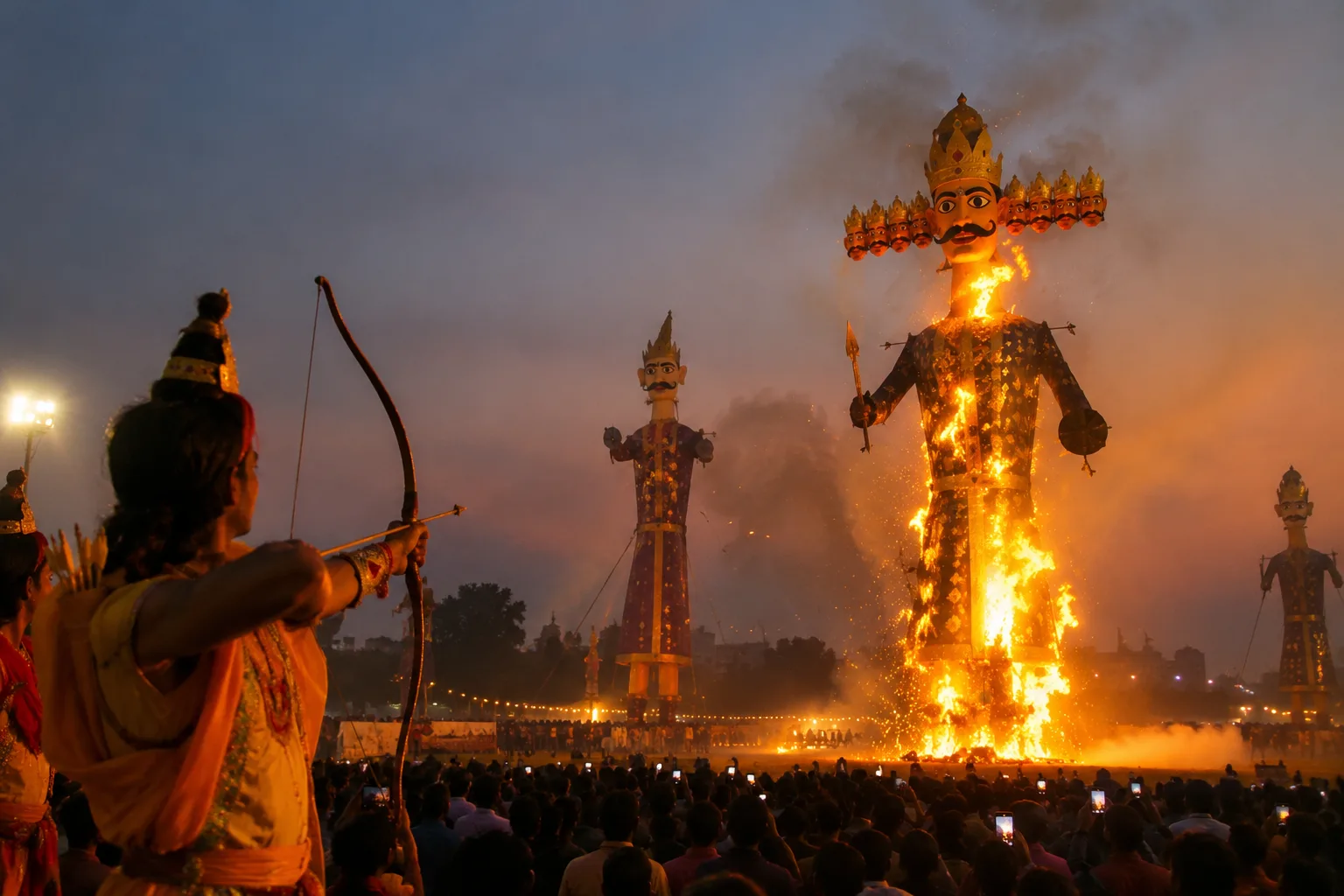
The tenth day is celebrated as Vijayadashami or Dussehra in many parts of India, symbolizing the victory of good over evil.
Apart from Navratri, Garba performances may also take place at cultural festivals, weddings, community gatherings, and other special occasions.
Traditional Garba Dance and Its Steps
Traditional Garba is performed in a circle, with dancers moving rhythmically to music. The dance combines simple footwork, coordinated hand movements, clapping, and graceful turns.
Common elements include:
- Circular movement: Dancers move around a central point, usually following the direction and rhythm established by the group.
- Rhythmic clapping: Handclaps help maintain the beat and create a collective rhythm.
- Footwork: Repeated steps, side movements, and turns are coordinated with the music.
- Hand gestures: Dancers use expressive gestures and coordinated movements to complement the rhythm.
- Increasing tempo: Music and dancing may become faster as the performance progresses.
Beginners can learn basic Garba steps by following the rhythm, watching experienced dancers, and practicing simple movements before attempting faster sequences.
Difference Between Garba and Dandiya Raas
Garba and Dandiya Raas are both popular during Navratri, and they are often performed at the same celebrations. However, they have distinct characteristics.
Garba is traditionally performed with rhythmic steps and clapping, often in circles around a lamp or an image of the Goddess.
Dandiya Raas is performed using decorated wooden sticks called dandiyas. Dancers move in coordinated patterns and strike their sticks with a partner or other dancers in time with the music.
Although their movements and equipment differ, both dances celebrate Gujarati culture and contribute to the festive atmosphere of Navratri.
Traditional Garba Dresses
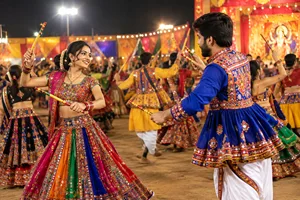
Traditional clothing is an important part of Garba celebrations. Bright colors, intricate embroidery, mirror work, and traditional accessories make the dance visually distinctive.
Women's Garba Attire
Women commonly wear a colorful chaniya choli, consisting of a flared skirt, a fitted blouse, and a dupatta. These outfits often feature mirror work, embroidery, and traditional patterns.
Jewelry such as earrings, necklaces, bangles, and waist accessories may complete the look. Comfortable footwear is useful because Garba involves continuous movement for extended periods.
Men's Garba Attire
Men commonly wear a kediyu, a traditional Gujarati upper garment, with a dhoti, churidar, or comfortable trousers. Colorful jackets, embroidered waistcoats, turbans, and traditional footwear may also be worn.
Modern Garba events often combine traditional designs with contemporary fashion while retaining the vibrant appearance associated with Gujarati celebrations.
Garba Music and Instruments
Music is central to the Garba experience. Traditional Garba songs frequently praise Goddess Durga, describe devotion, and celebrate the spirit of Navratri.
Common musical elements include:
- Dhol: A traditional drum that provides a strong rhythmic foundation.
- Dholak: A hand-played drum used in folk music.
- Manjira: Small metal cymbals that create rhythmic accents.
- Harmonium: An instrument used to accompany devotional singing.
- Vocals and clapping: Singers and dancers contribute to the rhythm and energy of the performance.
Contemporary Garba music may also incorporate keyboards, electronic beats, and modern arrangements. Despite these changes, traditional Gujarati folk songs remain an important part of many celebrations.
How Garba Is Celebrated Across India
Garba is celebrated on a particularly large scale in Gujarat, including cities such as Ahmedabad, Vadodara, Rajkot, and Surat. Public grounds, community centers, and event venues host gatherings where thousands of people may dance together.
In other Indian states, Garba events are organized by residential communities, cultural associations, educational institutions, and event organizers. Major cities such as Mumbai, Pune, Delhi, and Bengaluru also host popular Navratri celebrations.
Indian communities abroad organize Garba events in countries including the United States, the United Kingdom, Canada, and Australia. These gatherings allow people to celebrate their cultural heritage and introduce younger generations to Gujarati traditions.
Cultural Importance of Garba
Garba is an important expression of Gujarat's identity and India's diverse cultural heritage. It connects generations through music, dance, religious traditions, and shared experiences.
Its cultural importance can be understood through several aspects:
- Cultural preservation: It keeps traditional Gujarati music, costumes, and dance forms alive.
- Social unity: It encourages participation and interaction among people from different backgrounds.
- Tourism and local economies: Large celebrations support musicians, performers, costume makers, food vendors, and event organizers.
- Youth participation: Modern Garba events encourage younger people to learn and continue traditional dance forms.
- Global recognition: Garba has become an internationally recognized expression of Gujarati culture.
In December 2023, Garba was inscribed on UNESCO's Representative List of the Intangible Cultural Heritage of Humanity. This recognition highlighted its importance as a living tradition passed down through generations and sustained by community participation.
Health and Social Benefits of Garba
Garba is a festive cultural activity that can also provide physical and social benefits when practiced safely.
Physical activity: Repeated steps, turns, and movements provide cardiovascular exercise and help improve stamina.
Coordination and balance: Learning the steps can improve rhythm, coordination, and body awareness.
Social interaction: Group dancing encourages people to meet, interact, and build connections.
Emotional enjoyment: Music, movement, and community participation can support relaxation and enjoyment.
People should choose comfortable clothing and footwear, stay hydrated, take breaks when needed, and adapt the intensity of dancing to their fitness level.
Tips for Enjoying Garba for the First Time
If you are attending your first Garba event, a few simple preparations can make the experience more enjoyable.
- Learn a few basic Garba steps before attending.
- Wear comfortable traditional or festive clothing that allows easy movement.
- Choose suitable footwear and avoid accessories that may interfere with dancing.
- Drink enough water, particularly during long outdoor events.
- Follow the movement of the circle and maintain enough space for other dancers.
- Respect the religious and cultural traditions associated with the celebration.
- Start at a comfortable pace and take breaks when necessary.
Conclusion
Garba is much more than a traditional dance. It is a vibrant expression of devotion, community, and Gujarati cultural identity. Closely connected with Navratri and the worship of Goddess Durga, Garba brings people together through music, circular movements, colorful costumes, and shared traditions.
From its traditional roots in Gujarat to its growing popularity around the world, Garba continues to evolve while preserving its cultural significance. Its recognition by UNESCO further highlights the importance of protecting and celebrating this living heritage.
Whether performed in a village courtyard, a large city event, or an international cultural gathering, Garba remains a powerful symbol of unity, faith, joy, and India's rich traditions.
Frequently Asked Questions (FAQs)
1. What is Garba?
Garba is a traditional folk dance from Gujarat, India, performed mainly during Navratri in honor of Goddess Durga and the Divine Feminine.
2. Why is Garba celebrated during Navratri ?
Garba is performed as an expression of devotion to Goddess Durga. Its music and circular movements form an important part of Navratri's religious and cultural celebrations.
3. What is the difference between Garba and Dandiya ?
Garba traditionally features rhythmic footwork and clapping in circular formations. Dandiya Raas involves dancers using decorated wooden sticks to strike rhythmic patterns with partners or other dancers.
4. Which state is famous for Garba ?
Gujarat is the state most closely associated with Garba, particularly during its large Navratri celebrations.
5. What clothes are worn for Garba ?
Women commonly wear chaniya choli outfits, while men often wear kediyu with traditional trousers or dhoti-style garments. Both styles frequently feature colorful embroidery and mirror work.
6. Is Garba recognized by UNESCO ?
Yes. Garba was inscribed on UNESCO's Representative List of the Intangible Cultural Heritage of Humanity in December 2023.
7. Can beginners participate in Garba ?
Yes. Beginners can join by learning simple steps, following the rhythm, and moving at a comfortable pace. Experience is not necessary to participate.
8. What is the main message of Garba ?
Garba expresses devotion, unity, cultural identity, and the celebration of life. It also helps preserve Gujarati folk traditions for future generations.
Comments
0