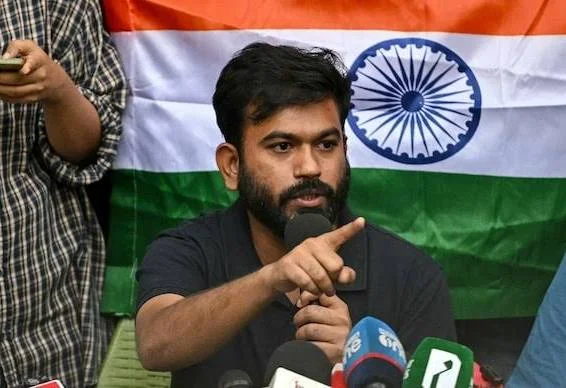
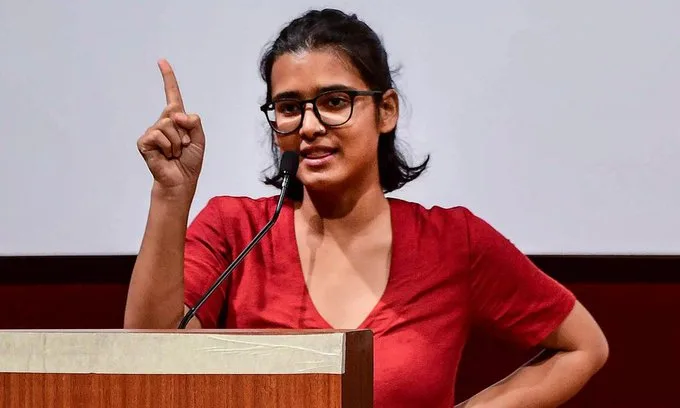
Abhijeet Dipke, founder of the Cockroach Janta Party (CJP), has attracted significant public attention in recent weeks because of his political activism, protests against India's election authorities, and repeated confrontations with the Delhi Police.
Between October 10 and October 17, 2026, Dipke was reportedly involved in demonstrations demanding the resignation of Chief Election Commissioner Gyanesh Kumar over disputed voter-list revisions. His detention, subsequent release and renewed calls for protests have brought his activities into the political spotlight.
1. October 10–11: Detention during protests in Delhi
One of the major developments occurred on October 10, when Dipke and other CJP leaders were detained after arriving in New Delhi to participate in protests against the Election Commission's voter-list revision process.
The movement questioned the removal of names from electoral rolls, arguing that the exercise could affect eligible voters and democratic participation. The Election Commission has maintained that electoral-roll revisions are intended to address issues such as duplicate entries, deceased voters and people who have relocated.
On October 11, Dipke and fellow CJP leaders Saurav Das and Ashutosh Ranka were reportedly released following proceedings before an executive magistrate. Their release was subject to conditions requiring them to maintain peace for a year.
2. October 12–13: Dipke vows to continue his agitation
Following his detention, Dipke continued speaking publicly about his political campaign and his experience with the police.
According to reports, he alleged that police had subjected him to mental harassment and restricted his ability to contact his lawyer and family. He also reiterated that his movement would continue despite the action against its members.
His statements reinforced the CJP's position that it would continue mobilising young people around electoral accountability, education and employment. Allegations concerning police conduct should, however, be understood as claims made by Dipke rather than independently established findings.
3. October 14: Criticism of the Supreme Court and election authorities
On October 14, Dipke reportedly made headlines in Nagpur after criticising the Supreme Court's handling of disputes involving electoral rolls and the Election Commission.
He questioned the court's response to concerns about voter deletions in West Bengal and argued that constitutional institutions should be held accountable for decisions affecting democratic rights.
He also described the government's response to protests as an “unofficial emergency.” These remarks reflected his political position and should not be interpreted as judicial findings.
4. October 15: Press conference and demand for the CEC's resignation
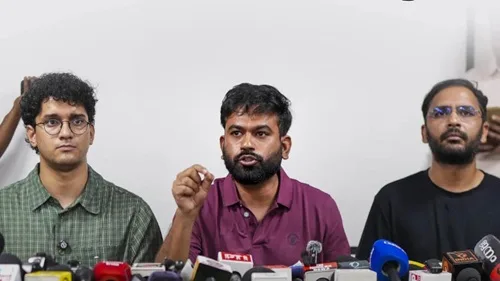
On October 15, Dipke participated in a press conference at the Press Club of India in New Delhi alongside student activists and other public figures.
He questioned the government's support for Chief Election Commissioner Gyanesh Kumar and raised concerns about police action against protesters and the Special Intensive Revision (SIR) of electoral rolls.
The press conference reportedly brought together people from different backgrounds, including student representatives, senior advocate Kapil Sibal and actor-activist Prakash Raj.
The gathering helped keep the debate over electoral transparency, institutional accountability and the right to peaceful protest in the public spotlight.
5. October 16: ‘Lehra Do Tiranga’ march and another detention
October 16 became another significant day in Dipke's recent political activities.
The Cockroach Janta Party and the All India Students' Association (AISA) planned a demonstration called the “Lehra Do Tiranga” march at Connaught Place in Delhi. The march aimed to protest the detention of CJP leaders Saurav Das and Ashutosh Ranka and renew demands for Gyanesh Kumar's resignation.
Delhi Police reportedly served Dipke with a notice prohibiting the planned march. He was subsequently detained along with AISA president Neha Bora as authorities sought to prevent the demonstration from escalating into a law-and-order problem.
The episode intensified debate over the balance between maintaining public order and protecting the constitutional right to peaceful assembly.
6. October 17: Release on conditional bail and a viral social media post
The latest major development came on October 17, when Dipke was reportedly released after signing a peace bond before a special executive magistrate.
According to media reports, his detention was processed under Sections 126 and 170 of the Bharatiya Nagarik Suraksha Sanhita (BNSS). His release was conditional, and he was required to comply with the applicable peace-bond conditions.
Following his release, Dipke also attracted attention on social media with a meme featuring Shah Rukh Khan from the film Veer-Zaara. The post joked about spending 24 hours in jail without Wi-Fi or a phone and became part of the online discussion surrounding his detention.
His release marked the end of his latest period of detention, but it did not necessarily resolve the broader political dispute surrounding the CJP's campaign.
Why has Abhijeet Dipke become a prominent political figure?
Dipke's recent activities are part of a broader campaign led by the Cockroach Janta Party. The movement reportedly began as an online satirical initiative before expanding into a youth-led protest campaign.
Its supporters have focused on several issues:
Electoral transparency: Questions about voter-list revisions and the removal of names from electoral rolls.
Accountability of election authorities: Demands for Chief Election Commissioner Gyanesh Kumar's resignation.
Youth participation: Mobilising young people around political and constitutional issues.
Freedom to protest: Opposition to preventive detention and restrictions on demonstrations.
Education and employment: Broader concerns that have helped the movement attract public attention.
The Election Commission has disputed allegations of bias in its voter-list revision process. Claims of deliberate electoral manipulation remain contested and should be distinguished from established facts.
What could happen next?
As of October 17, 2026, Dipke's release has brought an end to his latest period of detention, but it has not necessarily ended the political dispute surrounding the CJP.
The next developments to watch include whether the movement announces further demonstrations, how authorities respond to its planned activities, and whether concerns surrounding voter-list revisions receive additional judicial or administrative scrutiny.
Dipke's recent trajectory—from public criticism and demonstrations to repeated detention and conditional release—illustrates how the CJP has become part of a wider debate over electoral accountability, political dissent and the right to peaceful protest.
Conclusion
Abhijeet Dipke's activities over the past few weeks have placed him at the centre of a developing political controversy. His protests, criticism of election authorities, repeated detentions and release on conditional bail have attracted attention from both supporters and critics.
Whether his campaign gains further momentum will depend on the CJP's future activities, the response of government institutions and the broader public debate over electoral transparency and democratic rights.
Comments
0